• Introduction
  • About Ruby Red Republic
  • Contact
  • Blog

Ruby Red Republic

~ Thoughts on Red States and "Deplorables."

Ruby Red Republic

Category Archives: U.S. Politics

A Techless Revolution?

16 Wednesday Nov 2016

Posted by Jim Langcuster in Conservatism, U.S. Politics

≈ Leave a comment

Tags

Donald Trump, Identity Politics, Jim Langcuster, Middle American Radicals, Ruy Teixeira, Samuel Francis, social media, Talk Radio

samuel-francis

Samuel T. Francis, the paleocon intellectual who anticipated the MARs revolution a generation ago. 

I was with a close friend last night watching a Fox New interview with James Webb, who discussed the Democratic Party’s embrace of  identity politics and the role it has played in sapping the party’s historic support from the white working class.

At one point, my friend turned to me and observed, “Can you believe that it’s finally possible to watch these sorts of anti-PC discussions on television?”

He’s right, of course, and it reflects the fact that identity politics is a double-edged sword. Sooner or later, working-class whites inevitably would wise up to its unpalatable, if not frightening, implications and embrace a  version of their own identity politics – or so went conventional thinking.  Indeed the late paleoconservative intellectual and Washington Times columnist Sam Francis, who coined the term Middle American Radicals (MARs), foresaw this trend emerging a generation ago.  It emerged briefly around columnists Pat Buchanan’s short-lived celebrity candidacy in 1992.

Yet, I wonder:  Was Middle American Radicalism, which finally succeeded with Donald Trump, really an inevitable outcome?  A quarter century ago, this radicalism gained only a tenuous and brief hold under Pat Buchanan. But should we be surprised?  Unlike other other groups – African-Americans, feminists and LGBTs, for example – MARs lacked any discernible support among media, higher education, etc.

Only with the advent of alternative news outlets – Talk Radio, Fox News and, more recently and perhaps most notably, social media – has Middle American Radical sentiment managed to coalesce and to become self-aware.

Despite the entirely unexpected and unprecedented Trump victory, MARs face an unusually steep uphill climb over the next few years, certainly in demographic terms.

Democratic strategist Ruy Teixeira accurately observes that the Trump/MARs realignment will likely turn out to be a short-lived political resurgence that is increasingly supplanted by the shift of college-educated Millennials to the Democratic base, one that already is augmented by the all but unwavering support of Asian, African-American and Latino voters.

Emerging tech supplied the means through which the MARs insurgency coalesced around the unprecedented candidacy of Donald Trump.  Now a soon-to-be President Trump must supply the vision to ensure that this insurgency is not remembered a century from now merely as a flash in the political pan.

Just What Is The Alt-Right?

15 Tuesday Nov 2016

Posted by Jim Langcuster in Conservatism, U.S. Politics

≈ Leave a comment

Tags

alt-right, Breitbart, Donald Trump, Election 2016, Jim Langcuster, Paul Gottfried, Stephen Bannon

stephen-bannonPresident-elect Trump’s appointment of Stephen Bannon as his domestic security adviser has ignited a firestorm of criticism within the predictable quarters, namely mainstream media.

In the interests of providing a broad context for consideration and discussion, I’ve posted the Mother Jones article on Bannon. The whole subject of Breitbart and the alt-right is a complicated one, as most political movements are. The founder of Breitbart, the late Andrew Breitbart, was a Jew, a liberal Democrat who gravitated to conservatism while watching the Clarence Thomas hearings.

I’ll have more to say about this in future posts.  For now, suffice it to say that the alt-right label remains a fuzzy one, reflecting a loose association of many deeply disaffected conservatives of various ideological convictions. And to add an extra layer of complication to all of this, one of the conservative intellectuals singled out as a founder of the movement is Paul Gottfried, a Yeshiva University graduate and an unusually well-published university professor. In fact, Gottfried is acknowledged as having coined the term “alternative right” – or alt-right.

Adding an extra wrinkle to this story, Gottfried appears ambivalent about the role he played in the formation of this loose movement.

Troubling Statements

13 Sunday Nov 2016

Posted by Jim Langcuster in U.S. Politics

≈ Leave a comment

Tags

authoritarian language, Donald Trump, Election 2016, Gulag

​I have heard quite a few recriminative statements from some in the aftermath of the election.  One of the most disturbing goes something like this: “All of you Trump supporters are going to have own up to the racist, misogynist and homophobe you have elected.” 

Frankly, statements like this are the reason why millions voted for Trump, because this sort of hectoring language is not very far from “To the Gulag with you!”  Some Trump supporters may lack undergraduate and graduate degrees, but they do recognize authoritarian language when they hear it.

We Need Systemic Federal Reform

13 Sunday Nov 2016

Posted by Jim Langcuster in U.S. Politics

≈ Leave a comment

Tags

Democratic Party, Donald Trump, Federalism, secession

Well, let’s see: rioting in the streets,  the possible breakup of our two-party system  into a multiple party system and growing calls for secession in major U.S states. When are we going to come to terms with the fact that we are two and possibly even three or more nations shoehorned into one?

When are we going to realize that a one-size-fits-all governing strategy simply can’t be imposed on us any longer? When are we going to embrace systemic federal reform?

The Democrats’ Federalist Redux

10 Thursday Nov 2016

Posted by Jim Langcuster in U.S. Politics

≈ Leave a comment

Tags

2016 Presidential Elections, Bi-Coastal Party, Democratic Party, Donald Trump, Federalists, Hillary Clinton, Jim Langcuster, National Republicans, Whigs

federalism

A depiction of Federalist support (Federalist States depicted in blue) in post-colonial America.

As my beloved 8th grade history teacher liked to say, history repeats itself.

One of the remarkable outcomes of Tuesday’s election is how the Democratic party seems to be transforming into a predominantly bi-coastal and urban party – a sort of 21st century updating of the Federalists and their successors, the National Republicans and Whigs.

Upscale, Gentrified and Urban

Much like them, the Democratic Party has become an upscale, gentrified  and urban party pitted against a country party, the GOP, which resembles in many respects Jefferson’s Democratic-Republicans, though, to be sure, it still maintains a significant urban presence throughout the American heartland.

Earlier this year, a number of astute pundits pointed out that the Democrats would be in exceedingly dire straits if they lost, which,at the time, of course, was considered a far-flung possibility.

A Democratic Reckoning?

Last Tuesday’s upset does portend a reckoning for the Democrats.  The bi-coastal and urban makeup of the Democrats was not so much a pressing concern while they were in power.  But without the patronage associated with the presidency and a sufficient foothold within the vast American heartland, they face acute competitive disadvantages for the foreseeable future.
I was reminded of the Democrats’ hard reality viewing the splendid interactive post-election map posted by the New York Times, depicting presidential voting patterns on a county-by-county basis. Running my cursor across a wide swath of “Flyover Country” from the Shenandoah Valley region of northern Virginia to the upper northwest corner of Nevada I crossed many counties with Trump support as high or even higher than 70 percent.

From Yellow Dog to Ruby-Red Pachyderm

Incidentally, in my native northwest Alabama, which used to be one of the most solidly and assertively Democratic enclaves in America, those margins ran even higher.  Seventy-nine percent of voters supported Trump in my native county of Franklin.  In neighboring Colbert County, once a heavily unionized and arguably the state’s most consistently Yellow Dog Democratic county, Trump support exceeded 69 percent.

The Democrats dominated local politics when I attended high school in the region in the late 70’s, though large percentages of people supported GOP nominees in presidential elections, notably in 1964, 1972 and 1980.

Now even that has changed.  The GOP in northwest Alabama and in most of the rest of the state dominates politics at all levels, municipal to the federal.

What remains of the Democratic presence Alabama Alabama is in the predominantly African-American sections of Black Belt Alabama and Jefferson County, of which Birmingham serves as the county seat. Most of the rest of the state is deep-dyed red. And that holds true for virtually all of the South – deep red heartlands, punctuated by large urban, predominately African-American areas, though, to be sure, cultural creatives with strong Democratic sympathies are evident in many of these areas.

This steep demographic decline isn’t limited to the South. Throughout much of Red State America, state Democratic parties are coming to resemble the GOP patronage parties that soldiered on in the South from the end of Reconstruction until the Reagan Revolution in 1980.

It is even possible to travel thousands of miles across the breadth of the American heartland without even passing through a blue county. And this brings me back to my original premise:  The present-day American political party system bears a remarkable resemblance to the emerging political system of post-colonial America. We are increasingly divided between blue cities comprised of highly educated cultural creatives and the deep-dyed red rural heartland.

Federalist Redux?

The short-term problem for them, at least, as I see it, is that they are currently shut out of some states in the South, parts of the Midwest and large parts of the Far West. To be sure, the GOP faces its own demographic challenges: the decline of its main base, whites,  its reputation among millions of millennials as an obscurantist know-nothing party and its comparative failure to make inroads into emerging demographic groups.

Even so, the Democratic party seems to face the biggest challenge – at least, in the short term: It’s separation from much of the American heartland and it’s all but total reliance on a coalition of affluent, highly educated urban elites and minorities.

For now, it seems, the Democratic party’s great Federalist redux doesn’t bode well for it’s future – it’s immediate future, at least.

The End of Clintonism

10 Thursday Nov 2016

Posted by Jim Langcuster in U.S. Politics

≈ Leave a comment

Tags

Bill Clinton, Hillary Clinton, Jim Langcuster, Richard Nixon

nixon-and-clinton

Former President Nixon conferring with President Bill Clinton in the White House in 1993.

The Clintons arrived at her headquarters Tuesday night with high hopes of victory, possibly  even a resounding one that would shape the American political landscape for decades to come.

They left facing the bitter reality that Trump’s electoral upset had likely rendered the Clinton dynasty, if not Clintonism in general, extinct.

In many ways, the Clinton legacy bears remarkable parallels to  that of Richard Nixon – and in this case, I’m focusing entirely on Bill’s presidential legacy.  Both Nixon and Clinton were gifted intellectuals, though Clinton was able to indulge his intellectual gifts publicly in a way that Nixon wasn’t, largely  due to his rather impeccable elite educational credentials and the fact that he had been largely adopted into the U.S. political Establishment. Nixon, largely because of his nonelite educational and provincial Republican pedigree, was denied acceptance – a factor that fed his deep-seated and self-destructive bitterness and paranoia, but that’s another story.

Along with keen intellects, both men also possessed razor sharp, incisive political minds able to perceive and quickly seize on fleeting political opportunities.  Indeed it was out of a sense of deep political necessity that both undertook moderate transformations of their respective political parties.

Both strategies were alike in the sense that they focused on winning voters in what is now known as Red State America, and the South played a particularly significant role in both efforts. In fact, both men will be remembered as architects of Southern political strategies.  Likewise, both Nixon and Clinton were political moderates who reluctantly tacked their parties to the right to capitalize on the South, though Nixon was at heart far more of a centrist than Clinton, a Baby Boomer who possessed the soul of a maverick New South liberal.

In time, historians may discern interesting parallel.

Both men were unusually perceptive and astute political gamesmen and improvizers. They knew how to exploit political opportunities when they arose, even in those instances when these ran against their political temperaments.

In Nixon’s case, Sen. Barry Goldwater’s disastrous 1964 presidential campaign nevertheless opened up a major opportunity for Republican prospects in the South.  And this provided Nixon, a pragmatic centrist like his predecessor and political patron, Dwight Eisenhower, with a strong incentive to capitalize on this opening by moving his party to the right.  The Red State populism of George C. Wallace as well as the need for Nixon’s need to protect his right flank from an internal insurgency provided additional impetus.

In the end, though, Nixon’s pragmatic centrist vision of the GOP, leavened a bit by hardcore-sounding conservative rhetoric to appease the post-Civil Rights Southern voters, was ultimately supplanted by Reagan’s modified Goldwater model.

Likewise, Clinton’s brilliant re-tooling of the Democratic Party in the early 90’s ultimately may be superseded by a considerably more left-leaning model inspired to one degree or another by the Bernie Sanders insurgency against Hillary Clinton in the 2016 Democratic primaries.

That is why in the end, both Richard Nixon and Bill Clinton may be as brilliant strategists whose visions for their respective parties supplied valuable but only temporary solutions for their parties’ political fortunes.

To put it another way, they may be remembered as two of American history’s most gifted political strategists, though not  as the architects of enduring political traditions as Andrew Jackson, Franklin Roosevelt and Ronald Reagan were.

Are the Democrats the New Federalists?

09 Wednesday Nov 2016

Posted by Jim Langcuster in U.S. Politics

≈ Leave a comment

Tags

Democratic Party, Donald Trump, Election 2016, Elites, Federalists, Jim Langcuster, Urban Elites, Whigs

hamilton

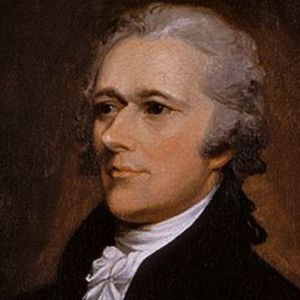
Alexander Hamilton, Founder of the Federalist Party.

The prairie winds that swept across the great American heartland last night do not bode well for the future of the Democratic Party.

By becoming, however unwittingly, a bi-coastal party, the Democratic Party is arguably the 21st century equivalent of Federalists and their successors, the Whigs – an party of gentrified, well-educated urban elites. As my beloved 8th grade history teacher used to say, history has repeated itself. In a remarkable way, the 21st century American party system resembles the proto-party system that emerged in the years following constitutional ratification, pitting an upscale urban Federalist Party against a country party, Jefferson’s Democratic-Republicans.


Earlier this year, a number of astute pundits pointed out that the Democrats would be in exceedingly dire straits if they lost, which,at the time, of course, was considered a far-flung possibility. I think that this is an important point to bear in mind. Things only worked for the Federalists when they wielded power and the political patronage that comes with it. Without this patronage and without a sufficient foothold within the vast American heartland, they will find themselves at an acute competitive disadvantage.

Racism or Anti-Cultural Marxism?

08 Tuesday Nov 2016

Posted by Jim Langcuster in U.S. Politics

≈ Leave a comment

Tags

Civil Rights, Cultural Marxism, Donald Trump, Martin Luther King, Political Correctness

trump-rallyI’ve been intrigued by repeated media and social media outbursts about the racism in Trumpian ranks.  Certainly there is some racism in the ranks – I won’t deny that.

But much of what is perceived as racism isn’t about race per se but rather about how race and, for that matter, gender, have been used within the last quarter century as a principal weapon of cultural Marxism.

All revolutions and social struggles release a sort of nervous energy that never dissipates. The intense libertarian/Jeffersonian energy that was released during the American Revolution, while perhaps waxing and waning over the last quarter millennium, has endured and even mutated significantly. In a sense, the civil rights movement bears a striking resemblance to the libertarian/Jeffersonian tradition – not surprising given that the movement is partly the ideological offspring of this libertarianism – and, like its progenitor, released its own energy a half century ago.
To put it another way, the civil rights movement is mutating too, and one of the effect of this mutation is that racism and other forms of intolerance are being defined up, in a manner of speaking, to more ambiguous forms of human behavior. This is where it has taken on very palpable cultural Marxist hues. It’s no longer considered sufficient simply to accept Martin Luther King’s  expressed hope – now immortalized in high-school and college history textbooks – that all men and women one day will be judged by the content of their character rather than by the color of their skin. One is expected to not only to tolerate but even to embrace a whole array of attitudes now days. Many see this as a form of proto-totalitarianism that is increasingly being expressed in unusually virulent and disturbing – not to mention, Kafkaesque – ways, particularly on many college campuses.
Are the vast majority of Trump voters aware of these cultural Marxist trends?  Of course not.  But they see these disturbing social and cultural trends unfolding in society, particularly on college campuses, and they’re screaming, “Enough!” And, predictably, they are met with the charges of intolerance and bigotry.
That is one factor among several that have accounted for the Trumpian revolution – or counterrevolution – or whatever one chooses to call it.
Call me a deplorable and irredeemable bigot or whatever other term the left develops to stock its rhetorical quiver, but the majority of rank-and-file Trump voters are seeing these cultural Marxist trends playing out in society, and they are concluding that this is not the way they define being an American and living in a free country. I believe that the vast majority of Trump voters are as committed to civil discourse as anyone else, but they refuse to submit to anything resembling an Orwellian social order.
They may not be as educated as the average Hillary voter, but  they perceive emerging trends that simply do not bode well for liberty, at least, as they have understood that term all their lives. And, predictably, they’re pushing back.
Newer posts →

Subscribe

  • Entries (RSS)
  • Comments (RSS)

Archives

  • December 2023
  • November 2023
  • July 2023
  • June 2023
  • January 2022
  • December 2021
  • November 2021
  • October 2021
  • September 2021
  • May 2021
  • April 2021
  • March 2021
  • February 2021
  • October 2020
  • September 2020
  • August 2020
  • February 2019
  • December 2018
  • November 2018
  • June 2018
  • March 2018
  • December 2017
  • November 2017
  • October 2017
  • February 2017
  • December 2016
  • November 2016

Categories

  • Alabama History
  • American Education
  • American Federalism
  • American History
  • Brexit
  • Censorship
  • Christianity
  • Conservatism
  • Devolution
  • Federalism
  • Geo-Politics
  • Imperial Decline
  • Localism
  • Mainstream Media
  • Nullification
  • oligarchy
  • Patriotism
  • Red-State Faith
  • secession
  • Secularism
  • Southern Athletics
  • Southern History
  • The Passing Scene
  • U.S. Politics
  • Uncategorized

Meta

  • Create account
  • Log in

Website Powered by WordPress.com.

  • Subscribe Subscribed
    • Ruby Red Republic
    • Join 27 other subscribers
    • Already have a WordPress.com account? Log in now.
    • Ruby Red Republic
    • Subscribe Subscribed
    • Sign up
    • Log in
    • Report this content
    • View site in Reader
    • Manage subscriptions
    • Collapse this bar
 

Loading Comments...