• Introduction
  • About Ruby Red Republic
  • Contact
  • Blog

Ruby Red Republic

~ Thoughts on Red States and "Deplorables."

Ruby Red Republic

Tag Archives: Jim Langcuster

A Primer for a New Southern Awakening

17 Wednesday Nov 2021

Posted by Jim Langcuster in American Federalism, Conservatism, Federalism, The Passing Scene

≈ Leave a comment

Tags

Cultural Traditionalism, Jim Langcuster, South, Southern Determinism, Southern Regionalism

Glenn Youngkin campaigning for governor of Virginia

I urge every one of the visitors to this site to read Ryan Grimm’s excellent article in The Intercept assessing the recent GOP victories in heretofore blue Virginia.

While you are at it, commit this term to memory: “cultural traditionalists.” This is the segment of voters very likely to comprise the hinge on which American electoral fortunes will turn over the next decade.

Bear in mind, too, that the article, albeit unconsciously on Ryan’s part,  confirms some of the points I have struggled to make over the last generation about the future of the South within the larger American cultural and political matrix.

It may come as news, maybe even a shock, to some of my readers, but the fact remains that Abraham Lincoln won – not only  the Civil bWar but also the struggle for American identity, certainly in terms of which side of the great political division that emerged during the 1788 constitutional debates would get to impose its indelible mark on this country in how it regards and governs itself and how it defines citizenship.

I have mentioned before that while I chose to label this website within the larger context of American identity, I remain a rather unrepentant Southern nationalist, though, I should stress, a maverick one.

More than a quarter century ago, I attended the founding meeting of the League of the South and was also a founding member of Southern Party as well as author of its inaugural document, the Asheville Declaration.

I don’t regret my initial association with those organizations, though I do possess regret, a deep well of regret, in fact, over the turns both organizations ultimately took. They confused low-hanging fruit for political reality and they have paid an egregiously high price for this tunnel vision.

They cast their lot with a segment of the population that is becoming increasingly more marginalized and even reviled by the national elites: for lack of a better term, Confederate memorialists.

Consequently, the League and the Southern Party effectively have been consigned to political oblivion, banned from social media and figuring prominently on left-wing watch lists, widely regarded, if they are even noticed,  by many, if not most, rank-and-file Americans as white nationalist fringe groups.

As I have argued before on this forum, it didn’t have to be this way. The League of the South started out with good intentions. It aspired to function as a reservoir of intellectual talent – a think tank, of sorts – as well as a rallying point for contemporary Southerners interested in articulating a regionalist/nationalist vision for the 21st century.

It was not preordained to travel down the neo-Confederate track, and with twenty-plus years of hindsight, I am more convinced than ever that avoiding this option would have placed both efforts onto a solid political trajectory toward significant success.

The handful of academics who conceived the initial League of the South effort were spot on in one assessment. They perceived even then that the country already was in a parlous state, rife with political and cultural divisions that have since mutated into the intractable impasse that many pundits on both ends of the spectrum now characterize as Civil War II.

They should have capitalized on that; in fact, they should have focused entirely on that. It is now the pink elephant in American life that no one can ignore any longer, not even the so-called Legacy Media. Indeed, the  full embrace of this hard reality a generation ago would, certainly by now, have  ingratiated the movement with a much wider demographic. They would have occupied moral high ground not all that far removed from Churchill, who had expended so much political capital in the 1930’s warning about the Nazi threat.

Yet, both expended most of their precious political capital for a mess of political pottage –  Confederate heritage and  restorationism – fretting about heritage violations and dredging up elements of the Lost Cause canon when they should have been concentrating on the here and now, crafting a political vision for the present-day South, one fully cognizant of the changes that have swept over the region over the last 150.

All Southern partisans of whatever ideological stripe must face up to the fact that Lincoln left an indelible imprint on both American and Southern identity and culture – period. There is no getting around that and this forlorn hope of restoring the Confederacy within the defeated 11 Southern states is entirely that – a forlorn hope.

This is why if the South rises again it will occur within a distinctly American context rather than a Confederate one. To express it another way, the South will rise only when enough cultural traditionalists of whatever ideological stripe conclude that the South constitutes the only solid ground on which the American Experiment in self-government and individual liberty can be sustained.

That is why I have advocated for the last 20 years to put Confederate Lost Cause ideology aside and to build a self-determinist movement constructed from the things that define the 21st century South. The success of any future Southern regionalist movement will hinge on his well it articulates and expresses growing concerns about the fissures forming on the country’s cultural and political landscape.

Indeed, success will rest in large measure on how well such a movement assesses and acknowledges the cultural and political change that has swept across the South over the last century and a half. Such a movement will take root and thrive only when millions conclude, however painfully and reluctantly, that the South represents the American Experiment’s only viable cultural lifeboat.

Only on this foundation can we begin to build the elements of a new Southern indentity drawing both from facets of its past as well as the unavoidable realities of its present and future.

Incidentally, Ryan’s article in The Intercept constitutes a very good basis – a primer – for articulating that vision.
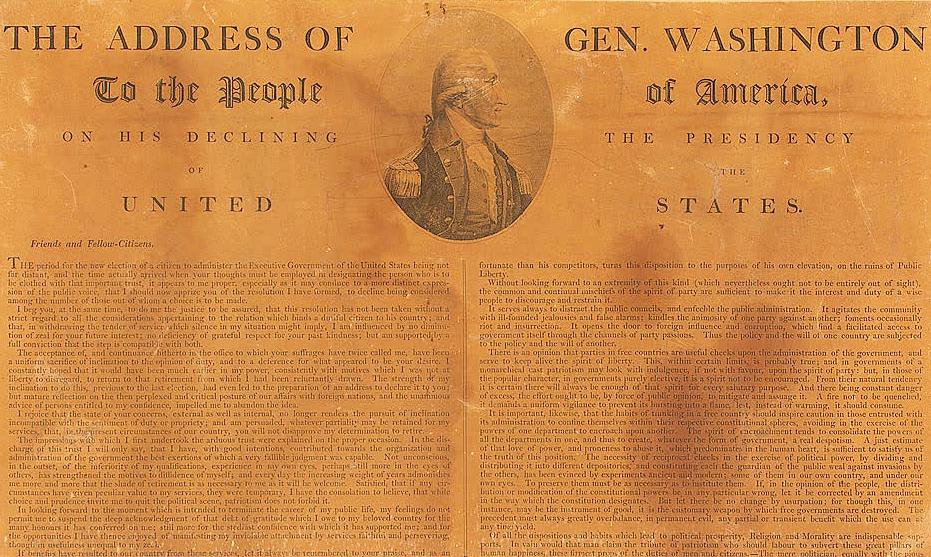
Ever-Vibrant Revolutionary Energy

16 Tuesday Nov 2021

Posted by Jim Langcuster in American History, Imperial Decline, Patriotism, The Passing Scene

≈ Leave a comment

Tags

Anti-Imperialism, Jim Langcuster, Noninterventionism, Old Right, Washington's Farewell Address

I have always been one of those really odd misfits: a partisan Southerner who has always harbored a profound admiration for the firebrands of what is now known as “the Old Right,” those almost exclusively Midwestern and Western political leaders, many of whom identified with Progressivism, who hewed closely to the principles outlined in George Washington’s Farewell Address.

They regarded the United States as an undertaking not only conceived in liberty grounded in the principles of the 18th century Enlightenment but also one sworn to oppose intervention and imperialism at every turn.

America, after all, was the outgrowth of a coalition of sovereign States, former colonies, that had broken free of the most powerful and extended empire in history. It was emerging even in Washington’s presidency as one of the most singular nations in history, one that soon would be regarded as history’s most successful post-colonial enterprise.

Why would these former colonials want to squander it all by building an empire of their own? That essentially was Washington’s reasoning as well as that the Old Right tradition that was most prominent in the years between the two world wars.

I was discussing a similar topic earlier this week with a relative. Eisenhower’s 1961 Farewell Address not only is significant for what it warned about but also how it characterized the United States and how Americans historically have regarded themselves: as a people for whom the task of empire-building not only was an entirely new and alien concept but also inimical to Ameican experience and identity.

That is why I read with great interest this article about the protests that spontaneously broke out among American troops in every theater of operation in the months following World War II.

If there is one thing that I have learned through my long reading of history it’s that old habits really do die hard. A burst of revolutionary idealism was released in 1776 and it has never dissipated. And even the Old Right, which many people had assumed had exited the American political arena after the Pearl Harbor attack, has staged a remarkable comeback, certainly within the last 30 years since the Pat Buchanan presidential insurgency.

Passing a Forgotten Milestone

07 Sunday Nov 2021

Posted by Jim Langcuster in Geo-Politics, Imperial Decline, The Passing Scene, U.S. Politics

≈ Leave a comment

Tags

#LateAmerika, Berlin Wall, Corruption, Jim Langcuster, Ruling Class

The fall of the Berlin Wall, Nov. 9, 1989.

It is remarkable to think that in two days this seminal world event – the fall of the Berlin Wall marking the collapse of Soviet communism, arguably the greatest event of the last half of the 20th century – will have occurred 32 years ago, though it is now significantly forgotten.

Even more remarkable to me is the fact that a rising generation of Americans led by intellectual nonentities such as Ocasio-Cortez now embrace socialism with opeb arms, despite its being seemingly consigned to the ash bin of history three decades ago.

I recall that day so very long ago as it it were yesterday: As a Cooperative Extension professional I was returning from a visit to South Alabama and stopped off in Montgomery to visit my favorite used bookstore.

NPR was being broadcast on on the store’s sound system. There was talk of some opening of the Berlin Wall, though likely one that would not occur for several weeks. After purchasing a couple of books, I jumped into my little red Nissan truck and sped north up Interstate 85. When I entered the living room my wife was glued to the TV as ecstatic East and West Berliners danced arm in arm atop the Berlin Wall. My jaw dropped. It is a memory I will take to my grave.

Within a year or so of that event, one who emerged as one of the decades most fashionable and preeminent thinkers of the 1990’s, a neoconservative policy wonk named Francis Fukayama, even went to far to argue that the fall of Eastern European socialism served as a confirmation of Hegel’s dialectic – that supple, pro-market liberal democracy represented the end of history, the working out of humanity’s historical contradictions.

To many around the world, the United States, most notably its costly two-generational struggle against global communism, seemed entirely vindicated.

Thirty-plus years later, all this headiness seems so dated. And even more remarkable to me is how American life has come in many respects to closely resemble facets of the old Soviet Union and its Eastern European straps, replete with a nomenklatura that not only brazenly enriches itself but also its sons and daughters – one that even calls out a class of despised Kukaks (i.e., working class whites) as the direst threat to enlightened thought and and what our rulers now blandly describe as “our democratic values.”

In true Soviet fashion, dissidents not only are spied on but even consigned to prisons for months without being served habeas corpus, while a compliant media, on the elites’ behalf, sweep all of this incipient tolitarianism under the rug. And amidst all of this is a disenfranched population of tens of millions of ordinary, fed-up, put-upon people who, much like the Soviet masses decades ago, invent mordant jokes not only about the corruption of their ruling class but also how all of this is covered over by Legacy Media pixie dust

Millions yearn for the day when these corrupt nabobs finally will be served their long-awaited comeuppance – and, quite frankly, why shouldn’t they?

Welcome to #LateAmerika.

The “Gorbachev Moment” Approacheth

07 Sunday Nov 2021

Posted by Jim Langcuster in Alabama History, American Federalism, Federalism, Localism, secession, The Passing Scene

≈ Leave a comment

Tags

American Breakup, American identity, American National Identity, Civil War II, Gorbachev moment, Jim Langcuster, secession

Mikhail Gorbachev

Speaking as one who loves American history, the thought has occurred to me time and again: We have never been as united as we think we are. It was a major concern of the constitutional framers and, apart from a few factors in history that have created the illusion of unity, we remain a very pluralistic polity, culturally and politically, and we simply have to find a way to create new political structures to ensure we remain adequately equipped against geopolitical threats such as China but that also ensure that we don’t end up beating out each other’s brains.

If you have been a frequent reader of this forum, you are likely aware that I have come to describe all what is unfolding in the United States as our very own  “Gorbachev moment.” Recall that some 30 years ago the ill-fated refomer of Soviet society? Mikhail Gorbachev tried to negotiate a union treaty to hold things together but events got ahead of him. Boris Yetsin, president the Russian Soviet Republic, signed a compact with his counterparts in Byeloerussia and Ukraine that resulted the breakup of the Soviet state.

As this article attests, we seem to be approaching a similar impasse in the United States, reflected in the growing number of ordinary Americans who express an interest on secession.

For now, our leadership class remains conspicuously silent on the topic of secession. But the inevitable “the Emperor hath no clothes” moment inevitably will arise. Sooner or later, some prominent American, perhaps a governor or senator from either a blue or red state, simply will have to state frankly, “Something’s got to give.”

This is when the facade will crumble.

Then, pehaps, we can hope for some sort of modus vivendi that holds the country together to fend off geopolitical threats, though while ensuring that domestic  power is returned to states or, perhaps more realistic, compacts of states, that we can be assured of sufficient insulation from our increasingly malignant and consolidating ruling class.

Claremont Institute Takes up the Secession Banner

05 Tuesday Oct 2021

Posted by Jim Langcuster in American Federalism, Federalism, secession, The Passing Scene

≈ Leave a comment

Tags

Claremont Institute, Jim Langcuster, neosecessionism, secessionist

I have to say that after roughly 30 years of preaching the merits some form of secession, full-fledged or lite, as a solution to this nation’s intractable problems, it’s gratifying to see a growing number of Americans, prominent Americans, including those associated with major cultural institutions, picking up the banner.

The group that has weighed in the most and, well, rather improbably, is the Straussian-inspired Clarement Institute in California. Historically speaking, this institution, in keeping with the ideals of its intellectual guiding light, Leo Strauss, has extolled civic nationalism and generally held up the 16th president, Abraham Lincoln, as the architect of this civic nationalist vision.

Given that fact, the Clarement Institute undoubtedly will strike many as an unlikely bearer of neo-secessionism. Yet, in one notable respect, it supplies the perfect impetus for this struggle – first and foremost because it is far removed from any neo-Confederate association.

Allow me briefly to share my own experiences with this. Speaking as one who had been plugged into this movement over the last few decades primarily through paleoconservarive and paleolibertarian connections, I have noticed a rather frustrating, if not appalling, tendency to pursue low-hanging fruit rather to cast a wider net.

The League of the South, originally known as the Southern League, essentially a brainchild of paleocons and paleolibs, set out not only with good intentions but also workable ones. The original intention, or so it seemed to me at the time, was simply to reconstruct a constitutional case for modern secession drawing on the talents of a handful of truly eminent, albeit somewhat obscure, paleocon and paleolib writers and academics.

Granted, they were in for a long slog. Even so, they initially gathered some respectful media coverage and even managed to publish a couple of very thoughtful opinion pieces in major newspapers. A couple of more mainstream columnists, notably George F. Will, even offered a respectable comment or two.

Yet, rather predictably, the League wondered off the reservation – that is to say, the reservation of respectable discourse. The League’s founding in the mid-1990’s corresponded roughly with the raging battle over the display of the Confederate battle flag in public venues, notably the Alabama and South Carolina capitol buildings, as well as the incorporation of battle flag motif into the Georgia and Mississippi flags.

At some point early in its founding, the League’s leadership embraced the Southern Heritage activists. In fact, they embraced them so closely that the League quickly became as inextricably linked with the Lost Cause as any descendant group, the Sons of Confederate Veterans and the Daughters of the Confederacy.

I had used my small influence within the ranks to argue against this. We were going after low-hanging fruit when the top priority should have been creating a space within which neosecessionism could be discussed as openly and dispassionately as possible and within as wide an arena as possible – a national arena.

Yet, incredibly, the League was drawn into the daily warp and woof of heritage activism, attracting large numbers of people whose preoccupation almost solely was with the battle flag, which became a virtually endless topic of discussion and obsession. The League would pay an egregiously high price for this shortsightedness.

By the late 90’s an effort was made to break out of this impasse through the formation of a Southern Party, an effort that aimed to be disruptive, namely by advocating peaceful secession as the keystone of its platform, one which, in many ways, incidentally, anticipated the nationalist/Republican agenda of the present day.

Yet, this movement quickly succumbed to heritage activism too.

Following the collapse of the Southern party, I effectively exited the Southern movement and conceived my own alternative idea that was dubbed “Home Rule for Dixie,” one that advocated an entirely different approach to Southern identity and secession. I called for nothing less than the abandonment of neo-Confederate dogma entirely.

As I contended, any new expression of Southern identity and secession not only must be built from the ground up but also on new foundations, actually predominantly American ones. As I and a few others in the Southern movement had realized, most contemporary Southerners, while immensely proud of their region as well as being Southern, simply no longer related to the Old Confederacy in any meaningful way. No, for Southerners, any Americans, for that matter, to be won over to the merits of secession, the arguments would have to be marshaled within a distinctly American context and with the firm assurance that American values, including racial tolerance and good will, would be preserved.

This is why I salute the valiant Claremont Institute. It not only has taken up this banner but has resolved to carry on the struggle within a context and employing language that more Americans can understand.

Post-Russian Revolutionary Redux

06 Monday Sep 2021

Posted by Jim Langcuster in The Passing Scene

≈ Leave a comment

Tags

anti-white, Ayn Rand, Jim Langcuster, progressive left, Russian Revolution, The Left

The Objectivist novelist and writer Ayn Rand.

Every now and then one runs across a very good, thoughtful and even intellectually courageous Quora submission. This is one of them. 

Two thoughts came to mind while reading this splendid piece. First, a few on the left are beginning to catch a glimpse behind the curtain. Recall that many Western communists in the 30’s and 40’s defected because they felt as if they simply were trapped on a treadmill of lies and self-contradiction. 

We are beginning to see this now among at least a few on the left.  A Few younger people are peering behind the curtain. What they discover are the same sorts of scabrous, self-aggrandising people associated with earlier iterations of the left who employed rhetoric purely with the intention of securing and remaining in power. 

I also was reminded of something I read in Barbara Branden’s bio of Ayn Rand. Rand left the Soviet Union after it became apparent that she, as a bourgeois, college-educated Soviet citizen, would be enlisted throughout her life solely to work in an auxiliary role, consigned despite, her gifts, to menial tasks to serve the needs of the vanguard (working) class. 

That is precisely what a few whites and principled people of color are realizing. A relative mentioned to me recently that this topic even comes up in the Showtime series White Lotus, which satirizes white privilege, guilt and all the other sundry pathologies allegedly bound up in Western culture.

Many affluent and middle-class whites are beginning to perceive that citizenship in the future will mean assuming middling jobs – support roles to serve what the elite class regards as vanguard groups, namely, people of color.  

Indeed, I think that we will begin to see a growing number of middle-class whites foregoing college entirely in favor of trade-school, knowing full well that college, even elite colleges, no longer will afford aspiring whites upward mobility. This country will come more and more to resemble the post- Russian revolutionary world that faced Rand and other products of bourgeois backgrounds. 

Deserving only Our Searing, Unbridled Contempt

13 Tuesday Apr 2021

Posted by Jim Langcuster in Uncategorized

≈ Leave a comment

Tags

1953 Workers Uprising, Bertholdt Brecht, East German Communists, Jim Langcuster, Tucker Carlson

Democratic Party Logo

In the poem “Die Lösung,” written after the East German Communist state’s brutal suppression of the June 17, 1953 Workers Uprising, playwright Bertholdt Becht pointed out the remarkable fact that the regime actually distributed leaflets stating that “the people had forfeited the confidence of the government and [that they] could only win it back by increased work quotas.” Brecht then employed this brilliant rhetorical punch, phrased as a question, which struck at the very heart of this autocratic, self-serving regime:  “Would it not in that case be simpler for the government to dissolve the people and elect another?”

Reflect on this for moment: The U.S. Democratic Party is proceeding with a remarkably similar objective firmly in mind. It realizes that its path to permanent power – that is to say, vanguard party status not all that different from the East German Socialist Unity (i.e., Communist Party) – lies in demographic replacement of current voters with immigrants, overwhelmingly illegal immigrants. And here is the really frightening part: It very likely will achieve its goal.

Even so, Fox News commentator Tucker Carlson has summoned the gargantuan fortitude to call out this strategy. And, predictably, all facets of left, particularly its agit/prop organs (i.e., Mainstream Media, Silicon Valley and unofficial censorship bureaus)  are baying for cancelation of Carlson’s program.

Speaking as an avid Star Trek fan, I’m reminded of the Borg collective’s  awakening and perfervid activity in response to anything it perceives as a threat to its vital functioning. And make no mistake: While at this point Carlson is little more than David battling Goliath, he has laid bare the Democrats’ paramount operating strategy: demographic replacement.

And let’s consider all of this alongside all the other advantages that the Democrats also have now secured. Not unlike the East German Communist Party in the decades following the suppression of its workers, the party has drawn close, horrifyingly close, to its ultimate goal of controlling the narrative through its command of all the major sources of cultural power: Mainstream Media, Silicon Valley, Big Entertainment, most of the federal  bureaucracy and, even more alarming, the national security apparatus.

The Democratic Party is now even poised to squelch all forms of dissent, largely by applying the labels “Racist!” and “White Supremacist!” to them.

Underscoring the extent to which the party controls the narrative and displays many of the traits of a vanguard party, its leaders now openly extol a future in which this will be achieved – when states are transformed from red to purple and eventually to solidly and reliably blue states. Its objectives are hiding in plain sight and its operatives even feel confident enough to express this aspiration publicly, albeit in slightly veiled form.

As Carlson stresses, the party’s no longer interested in winning over voters through conventional rhetorical appeals, which have distinguished party politics in this country for more than two centuries, but rather, in unmistakable East German regime style, stacking the electoral deck unscrupulously and in ways that virtually guarantee their political hegemony for generations to come.

The Democratic Party now harbors such unbridled contempt for U.S. voters that it now has set about replacing them with an  electorate of its own. And it is so caught up in it sense of entitlement and historical inevitability that it can’t even brook one lone political commentator who has summoned the temerity to call them out on it.

That is why Democratic Party should be regarded for what it is: a throughly corrupt, proto-totalitarian party, one that deserves nothing but our searing, undying contempt.

Oblivious to Facts

29 Monday Mar 2021

Posted by Jim Langcuster in Uncategorized

≈ 1 Comment

Tags

Jim Langcuster, Victor Davis Hanson, white privilege, whiteness

One of many books exploring the “problem” of whiteness

The incomparable Victor Hanson Davis weighs in again on the deeply disturbing trend of rising intolerance of whites.

He raises a point, one that has always fascinated me, about how rhetoric, particularly political forms of it, are subject to endless mutation. And as he stresses, one of the most disturbing examples of this is reflected in the increasing use of the term “whiteness” among liberal and progressives to describe the underlying pathology with American society.

Until recently, the common term was white privilege, though it ultimately proved inadequate in the face of everyday reality. After all, as Hanson observes, it’s simply untenable to argue that “a white Dayton, Ohio tire-changer is innately blessed in a way an unfortunate Eric Holder or Jay-Z purportedly is not.” So, consequently, white privilege has given way simply to “whiteness,” which, needless to say, evokes disturbing parallels to “Jewishness,” of which the Nazis made such ready use in the years leading up to their seizure of power.

Plenty of ordinary people, certainly when engaged in private discourse with family and friends, readily discern the genocidal implications of this rhetoric.

Yet, there are legions of whites, even those from comparatively stereotypical “deplorable” socioeconomic backgrounds, who remain insouciant in the face of this of this rhetoric and the horrifying effects it likely will produce over the next few generations.

Indeed, reading Hanson’s account earlier this morning, I was invariably reminded of a family of especially rabid “yellow-dog Democrats” in my native Northwest Alabama hometown who incongruently remain committed evangelical Christians but who still eagerly regurgitate whatever tripe their ancestral party puts in front of them.

They still hold maniacally to this identity even today as their region’s economy, largely as a result of their party’s neoliberal policies, has undergone headlong decline.

Northwest Alabama, once one of the country’s most obstinate bastions of yellow-dog Democratic sentiment, now stands as one of the reddest of red GOP bastions in the country, even as this family still waves the blue flags of dissent on social media. One even embarked on a pathetically obscene Trump rant a few months ago, invoking the f-bomb multiple times.

They are proverbial Kool-Aid drinkers. Will they ever be awakened to what is unfolding.

Highly unlikely.

When their grandchildren are singled out some day in public places and beaten senseless merely for bearing white skin, they likely will still be eagerly, even perfervidly, propagating ther party’s line.

But then, some people, irrespective of political conviction, will never yield to reality, especially when the truth proves too painful to accept.

America’s Judicial Impasse

28 Sunday Mar 2021

Posted by Jim Langcuster in American Federalism, Federalism, The Passing Scene

≈ Leave a comment

Tags

Black Swan, Federalism, Jim Langcuster, Judicial Impasse, Supreme Court

I wrote a piece along very similar lines weeks ago, only this writer has said it much better.

In terms of the Supreme Court, we have witnessed a fascinating playing out over the past two centuries. In many respects the heightened prestige of the court and, even more significant and troubling, our increasing reliance on it, speaks volumes about the breakdown of American federalism. In many notable respects the court has come to redress the ineffiencies of the legislative branch, which the Founders envisioned as serving as the principal, if not sole, source of domestic policy making.

However, the legislature simply is ill-equipped to serve a federal system this vastly extended and, frankly, unwieldy and increasingly inefficient. Yet, as this columnist stresses, political and cultural divisions in this federal union are now so acute that the Supreme Court has to be extremely judicious about the issues it adjudicates, lest it destroys its remaining reservoirs of legitimacy.

The consequence has been increasing judicial branch impasse. And this raises the question: What element of federal power is capable of resolving what ultimately could prove to be an existential black swan crisis, one that even may involve the viability of the Federal Union?

Bonhoeffer’s Warning

24 Wednesday Mar 2021

Posted by Jim Langcuster in The Passing Scene

≈ Leave a comment

Tags

Dietrich Bonhoeffer, ethics, Jim Langcuster, morality, Networked Human Exoskeleton, Nietzsche, stupidity, the Death of God

This characteristically trenchant observation by Dietrich Bonhoeffer,  the late Lutheran theologian and martyr s ss.06p  Nazism, speaks to a egregious failing of of modern society, certainly the way it is expressed today in the digital age.

Simultaneously inspired and troubled by what I have witnessed over the past two generations, I have spent the last few years developing a concept I have come to call the “Networked Human Exoskeleton.”

I argue that not only human progress but also humanity itself sprang from a networking phenomenon that started with simple forms of technology (e.g., clubs and cutting tools) the effects of which  over a long stretch of time were augmented by rudimentary language, followed much later by writing and mathematics.

Over many millennia the fusion of these four concepts not only shaped our hominin forebears into fully developed human beings but also enclosed our species into a kind of cocoon – an increasingly dense network that sustains and protects us but from which we are unable to escape.  For several reasons, I settled on the term networked exoskeleton to convey the sense of ensconcement that characterizes our species. While some of it is quite tangible and reflected in the technology that we use, much of it is incorporeal in nature, though all of these elements are fused together to provide our species with the protection that corporeal exoskeletons provide crustaceans and insects.

Yet, by its very nature it is like no other exoskeleton on earth –  a remarkable achievement that sets us apart from every other species on the planet. It’s growth within the past seven decades following the end of the Second World War has been nothing short of astonishing. We now inhabit an exoskeleton that extends it conceptual reach into the deepest reaches of our planet’s oceans and even beyond our solar system.

Yet, our exoskeleton, despite its age and enormous complexity, essentially is no different from the survival strategy of any other species in the sense that it represents only an improvisation across a very long stretch of time. Like every other evolutionary strategy on earth, our networked exoskeleton is only approximately rather than ideally suited to our species’ needs. Indeed there may come a day decades, centuries or millennia from now in which the evolutionary strategy embodied in our exoskeleton runs into an effective brick wall.

As I have expressed a few times in this forum, we very well may be fast approaching such as impasse. For many millennia, human beings were governed by overarching narratives supplied by myth and religion or a mixture of the two.

However, within the last few centuries, largely through rapid advances in scientific knowledge, these over-arching narratives have undergone steady erosion, perhaps most aptly embodied in Nietzsche’s observation about our having killed God. Consequently, society is now ignorant of a great many moral and ethical insights that were regarded as essential to the functioning of a healthy society only a few decades ago.

The Bonhoeffer quote above adequately expresses this unsavory fact of contemporary reality better than most others. All the more troubling to me and many others is the fact that so many moral and ethical appeals are now lost within a network that has now become so vastly extended and multifaceted. Indeed, it leads one to wonder if humanity will ever succeed in developing anything resembling a new over-arching narrative.

During the height of the Cold War, the expatriate Russian novelist and sage Alexander Solzhenitsyn observed that free speech, so widely affirmed as a sacred pillar of Western society, now essentially amounts to a dead letter because in a vastly extended and multifaceted consumer society such as ours, dissident speech has been rendered effectively meaningless.

So much has changed in the four-plus decades since Solzhenitzyn offered that observation. Indeed, due to advances in digital technology our network is now so vast and complex that all manner of philosophical and political appeals, even those issued with moral and ethical contexts, have been rendered effectively meaningless.

Consequently, Bonhoeffer’s warning about the propects of morality winning out in the face of rank stupidity seem more cogent and prophetic than ever before in history.

← Older posts
Newer posts →

Subscribe

  • Entries (RSS)
  • Comments (RSS)

Archives

  • December 2023
  • November 2023
  • July 2023
  • June 2023
  • January 2022
  • December 2021
  • November 2021
  • October 2021
  • September 2021
  • May 2021
  • April 2021
  • March 2021
  • February 2021
  • October 2020
  • September 2020
  • August 2020
  • February 2019
  • December 2018
  • November 2018
  • June 2018
  • March 2018
  • December 2017
  • November 2017
  • October 2017
  • February 2017
  • December 2016
  • November 2016

Categories

  • Alabama History
  • American Education
  • American Federalism
  • American History
  • Brexit
  • Censorship
  • Christianity
  • Conservatism
  • Devolution
  • Federalism
  • Geo-Politics
  • Imperial Decline
  • Localism
  • Mainstream Media
  • Nullification
  • oligarchy
  • Patriotism
  • Red-State Faith
  • secession
  • Secularism
  • Southern Athletics
  • Southern History
  • The Passing Scene
  • U.S. Politics
  • Uncategorized

Meta

  • Create account
  • Log in

Website Powered by WordPress.com.

  • Subscribe Subscribed
    • Ruby Red Republic
    • Join 27 other subscribers
    • Already have a WordPress.com account? Log in now.
    • Ruby Red Republic
    • Subscribe Subscribed
    • Sign up
    • Log in
    • Report this content
    • View site in Reader
    • Manage subscriptions
    • Collapse this bar
 

Loading Comments...