• Introduction
  • About Ruby Red Republic
  • Contact
  • Blog

Ruby Red Republic

~ Thoughts on Red States and "Deplorables."

Ruby Red Republic

Category Archives: American Federalism

Remembering an Academic Outlier

06 Tuesday Mar 2018

Posted by Jim Langcuster in American Education, American Federalism, Conservatism, Southern History, The Passing Scene, Uncategorized

≈ 1 Comment

Tags

Academia, Jim Langcuster, Melvin E. Bradford, National Endowment for the Humanities, paleoconservatism, Political Correctness

Melvin-Bradford

Melvin E. Bradford. Photo: Courtesy of the Fort Worth Independent School District.

Something got me thinking last night about  one of the nation’s late, great academic outliers and mavericks, the late M.E. Bradford, and how, if he had survived into his 80’s, would be regarded today as a pariah on most U.S. college campuses. Bradford was regarded as a “paleoconservative,” one of the leading intellectual lights of the paleocon movement.


He was a student of the old Southern Agrarian tradition and a vocal and intrepid defender of the Constitution and the Old Republic.  He was also a searing critic of the legacy of Abraham Lincoln and the 16th president’s efforts to consolidate the American Republic. And while in intellectual terms he was considered an outlier, Bradford was one of a number of traditionalist conservative academics who, once upon a time in America, were valued for the role they served in leavening and balancing out academic discourse. He taught at several prestigious academic institutions, including the U.S. Naval Academy, and served as president of the Philadelphia Society.


I cherish two of Bradford’s works – “Remembering Who We Are” and “Original Intentions: On the Making of the Constitution“ – for providing me with critical foundational bricks in my intellectual development and maturation.


A vocal Reagan supporter in the 80’s, Bradford was tapped to head the National Endowment for the Humanities. However, due to fierce opposition from neoconservative elements, he ultimately was passed over for William Bennett, the neocons’ candidate, but not before receiving the endorsement of U.S. Senators from every geographic region of the country as well as by a number of prominent leading conservative intellectuals, including Russell Kirk, Jeffrey Hart, William F. Buckley and Harry Jaffa.

 
Bradford’s ignominious upending by the necons played a key role in deepening the already palpable ideological divide between paleocons and neocons intellectuals within the Reagan coalition that culminated in Pat Buchanan’s insurgent presidential candidacy against George H.W. Bush in 1992.

Bradford died while undergoing heart surgery at the relatively young age of 58 in 1993.  In a sense, he is fortunate not to have lived into his eighties to reflect on the intellectual wasteland that characterizes American academia today.


It’s one thing to be an outlier, quite another to be a pariah, which is precisely the way Bradford would be regarded today in America’s toxic academic environment. And this is remarkable considering that scarcely a generation ago, academic mavericks and nonconformists such as Bradford were still afforded a place, even an exalted place, in many American institutions of higher learning, valued for the role they served in refining intellectual inquiry and open discourse.

Southern-Style Self-Flagellation

07 Thursday Dec 2017

Posted by Jim Langcuster in American Federalism, Southern History, U.S. Politics, Uncategorized

≈ Leave a comment

Tags

2017 Alabama Senate Race, Alabama, Alabama History, Jim Goad, Jim Langcuster, Southern History, Wayne Flynt

Alabama-Capitol

Alabama Capitol, Montgomery

Wayne Flynt, Auburn University emeritus professor of history,  has cultivated a reputation as Alabama’s progressive conscience. He is a prodigious writer who has published some 13 books on the history of Alabama and the South.

Predictably, he has weighed in on the upcoming Alabama Senate election, offering less than a savory view of Republican nominee Roy Moore.

Moore, Flynt contends, “represents the old Alabama of Robert E. Lee Ewell, of lynching and the sexual abuse of women.”

“Law to Moore is merely an instrument of exclusion and oppression, whether of women, teenage girls, African Americans, immigrants, Jews, Muslims, or homosexuals,” he contends.

I’m not surprised that Flynt regards Moore as the worst threat to Alabama’s reputation since Eugene “Bull” Conner.  But I do find it slightly irritating whenever Flynt raises these issues as an excuse to engage in another round of self-flagellation over what he perceives to be Alabama’s wretched political and cultural legacy, one for which Alabamians are obligated to atone.

I’ve never liked this sackcloth-and-ashes approach and that goes for countless other Alabamians.

I am far from a scion of the old South.  I come from simple old yeoman Southern stock, particularly on my father’s side. My paternal line and much of my maternal one were among the thousands of lumbers – desperately poor whites – who poured into this impoverished region in the early 1800’s simply because they had no place else to go.

Alabama was not only encumbered with legions of struggling poor whites but also with a slave economy that maintained a predominant hold in the Southern half of the state – one that collapsed after the close of the Civil War. Essentially we are talking about a deeply bifurcated state, culturally, politically and economically, that has been digging itself out of poverty and relative backwardness – imposed, incidentally by the Yankee equivalent of the British Raj – since the end of the Civil War.

One of the only socially redeeming factors on the Alabama frontier was evangelical religion, which dragged so many of our forebears away from a life of gambling, drinking and bare-knuckle fighting. This old religion, largely imported from New England, carried a strong Calvinist hue, and it carved out a place in the hearts of many Alabamians, even among apostates like me. It is deeply embedded in our DNA – as much as Catholicism is in Irish cultural DNA.

It’s not surprising that many of us identify with Moore’s public avowal of religious faith and propriety.

Alabama, like every other state in this Union, evolved out of a unique set of circumstances. And our politics and culture reflect many effects of that development.

Personally, there are many aspects of New England society that I find appallingly irritating and abhorrent and that have adversely affected the course of this country, especially after these tawdry shits became the cultural and economic hegemons after the war. Yet, they have enjoyed a free pass, largely because they remain our national and cultural hegemons.

Southerners, on the other hand, remain a special focus of animus among these people and their spiritual and intellectual progeny on the Left Coast. That is not all that surprising: As the world’s first propositional nation, Americans have always required a focus of animus, which the South has supplied, however unwittingly, since this country’s founding.

Consequently, every other ethnic group and region is afforded a pass for bad behavior stemming from its cultural inheritance EXCEPT the South, despite our region’s having inherited a cultural legacy with both good and bad elements like every other ethnic group and region in this nation and throughout the entire planet.

And honestly, given the unfortunate set of circumstances that fate has meted out to this region beginning with its initial settlement, why should we expect anything to have turned out differently – really?

Writer Jim Goad has argued – convincingly, I would contend – that Southerner and other poor Back Country whites provide elite American whites with a basis for conveniently passing off their collective guilt and insecurities.

I’ve grown weary of  this – and, quite frankly, it explains why I insist on flying only an Alabama flag on my property. It’s hard to think of myself as an American when this region of the country is treated as the national hind teat and relegated to sitting on a stool of everlasting repentance.

Yes, Professor Flynt, you have every right to bemoan the legacy of his native state – that’s your First Amendment right – but I and tens of thousands of Alabamians are tired of it.

Many American Republics Instead of One?

25 Saturday Nov 2017

Posted by Jim Langcuster in American Federalism, American History, Devolution, Federalism, The Passing Scene, Uncategorized

≈ Leave a comment

Tags

Civil War 2017, Jim Langcuster, National Divisions, secession, Thomas Jefferson

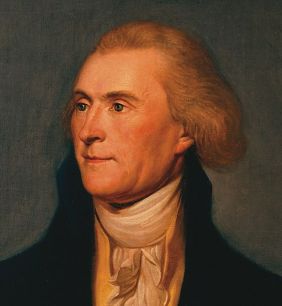
Thomas-Jefferson2

Thomas Jefferson

The American Thinker recently painted a disturbing picture of the American future.  We are embroiled in a Civil War – for now, a cold one, though one that bears many hallmarks of one that eventually could run hot.

And from my perspective as a conservative, the left seems implacably opposed to compromise.  And why shouldn’t it be?  They control most of the institutions that define cultural hegemony:  the mainstream media, the arts, popular entertainment and higher education, not to mention, elements of the so-called Deep State.   As I have argued in this forum many times, a Democratic victory last year would have sealed its victory.

The rancorous divisions in this country have prompted some thoughts about an observation Jefferson offered throughout the post-revolutionary period of American history. He presumed that this continent was too big to encompass one American nation. He expected that settlers, as they spanned across broad American continent, would establish several republics, though all of them would share mutual affinities.

That was not to be.  As it turned out, our forebears essentially hewed a kind of middle way between the ideals of Jefferson and his arch ideological rival, Alexander Hamilton. We have tended to place great emphasis on the Jeffersonian fixation with individual liberties, while tacking more closely to the Hamiltonian ideal of a centralized federal union.

And I wonder: Could the case be made that this push toward centralization has simply prolonged the inevitable? Isn’t it natural for a country this big to develop distinct regional identities, even fissiparous ones? Would we be getting along better on this sprawling continent if we had been allowed to develop several polities, albeit with strong shared mutual affinities?

A Different View of Patriotism

01 Wednesday Nov 2017

Posted by Jim Langcuster in American Federalism, Federalism, The Passing Scene, U.S. Politics, Uncategorized

≈ Leave a comment

Tags

American identity, Civil War, General John Kelly, Jim Langcuster, President Trump, Robert E. Lee, States Rights

john-kelly

Gen. John Kelly

Gen. John Kelly has predictably ignited a media firestorm for summoning the temerity to state that Gen. Robert E. Lee was behaving like most Americans of his time by choosing state over national allegiance.

“I would tell you that Robert E. Lee was an honorable man,” Kelly said in an interview with Fox News commentator Laura Ingraham. “He was a man that gave up his country to fight for his state, which 150 years ago was more important than country. It was always loyalty to state first back in those days. Now it’s different today. But the lack of an ability to compromise led to the Civil War, and men and women of good faith on both sides made their stand where their conscience had them make their stand.”

Sorry if I offend some of you, but I proudly and zealously place state and region over country. I happen to believe that the federal government is a constitutional republic conceived with sharply delineated powers and commissioned by the people of initially 11 (later 13) republics to operate as their common agent.

Modern Americans may even find it astonishing to learn early 19th century students at West Point, including the future Gen. Lee,  studied a constitutional textbook written by  attorney and legal scholar William Rawle and titled “A Constitutional View of the United States” that acknowledge the right of secession.

Of course, many of the nation’s premiere historians are weighing in on these intemperate statements, wondering how a man of Kelly’s immense accomplishments and responsibilities could harbor such antiquarian views.

“This is profound ignorance, that’s what one has to say first, at least of pretty basic things about the American historical narrative,” said David Blight, a Yale history professor. “I mean, it’s one thing to hear it from Trump, who, let’s be honest, just really doesn’t know any history and has demonstrated it over and over and over. But General Kelly has a long history in the American military.”

As for the views of these historians, I call on all of you to consider how all facets of American education, for better or worse, have been transformed within the last 60-plus years, largely as a result of the infusion of federal money and the expansion of federal patronage that has followed.

This has been accompanied by what I have come to call a miasmic orthodoxy that has settled on all levels of American education. Under the circumstances, can you see how pluralistic thinking among scholars, especially within the humanities, has been undermined?


Our Malignant Ruling Class (and Its Enablers)

27 Friday Oct 2017

Posted by Jim Langcuster in American Federalism, Localism, The Passing Scene, Uncategorized

≈ Leave a comment

Tags

Bigotry, Elites, Jim Langcuster, John Stossel, Old Aristocracy, Ruling Class

plutocratsMy Facebook Memories reminded me today that I shared this piece by John Stossel exactly a year ago.  Given what’s transpired over the past year, it’s worth revisiting.

Stossel observes that America has historically been bereft of the “old aristocracy” of Europe, but this hasn’t stopped many self-anointed meritocrats – at least, those who pass as such – from upbraiding the rest of us about our moral, ethical and social failings.

This script plays out day after day, not only among elites but also among those of the countless millions of ordinary Americans who are influenced to one degree or another by this imposed ethos.

I’m reminded of an especially annoying account shared with me a few years ago by a very talented former co-worker.  A native Alabamian with a palpable but cultivated Southern drawl, he enrolled in one of New York’s highly regarded Research I universities to complete a second graduate degree in his field. The course of study was an applied curriculum and he frequently was called upon to prepare projects to present to one of the classes.

The professor prefaced one of his presentations with the denigrating remark, “Let’s hear what Billy Bob has to say.”

Now, imagine the sh*t storm that would have erupted if this professor had prefaced a Muslim student’s presentation with something like “Let’s hear what Muhammad has to say” or an Indian Hindu student with “Let’s hear what Apu has to say.”

Granted, this professor technically can’t be defined as a member of the ruling class – he just rates as an enabler –  but this kind of brazen elitist contempt for people in so-called Flyover Country and particularly the South certainly reflects the cultural legacy of our ruling class.

We Southerners have shared these accounts among ourselves for years. A relative related to me a few months about about how her daughter-in-law, who developed rather flat General American accent in the course of growing up as an army brat, always feels compelled to intercede on behalf of high school teacher who conducts an annual student tour of New York City.  The teacher possesses a pronounced Appalachian twang, which frequently invokes the contemptuous obstinance of museum directors, tour guides and head waiters.

Granted, museum directors and tour guides do not rate as ruling class members, but their expressions of palpable aversion to this hapless educator and others speaks volumes about how successfully our self-anointed elites have sewn contempt for Southerners and other perceived bumpkins over the course of generations.

As I’ve said before, folks, I’m no Trump partisan, but I certainly understand and sympathize with the anger that has given rise to the Trump phenomenon.

Perhaps the serious blows dealt recently to Big Entertainment via the Harvey Weinstein revelations and to Big Media following new discoveries about DNC connections with the Trump Dossier will go a long way toward changing this dynamic.

Maybe the day is fast approaching when all or most of the facets of the Establishment left will be held to thedame level of contempt as Harvey Weinstein.

Yes, things may be changing – one can hope, at least – but for now, though, the ruling class still occupies the driver’s seat.  As Stossel stresses, it still decides “which ideas are acceptable, which scientific theories to believe, what speech is permitted.”

Why Is Secession Such a Terrible Word?

13 Friday Oct 2017

Posted by Jim Langcuster in American Federalism, American History, Devolution, Localism, U.S. Politics, Uncategorized

≈ Leave a comment

Tags

Articles of Confederation, Catalonia, Federalism, Jim Langcuster, John Stossel, Localism, secession, Thomas Jefferson, U.S. Constitution

John-Stossel

Libertarian pundit and author John Stossel. Photo: Courtesy of Gage Skidmore.

Libertarian author and pundit John Stossel is mystified by all the smack talk about secession.

“Why do so many people see secession as such a terrible thing?” he asks.

Stossel cites the recent Catalonian push for secession, stressing that the struggle is about Catalans taking charge of their own affairs.  As he stresses, no government is perfect, but local governments, generally speaking, are “more responsive to the needs of constituents.” Moreover, by keeping government closer to home, citizens secure a greater likelihood of keeping their governments under close watch.

So, why all the agonizing over secession? he asks.

Short answer:  because the people in charge of big governments are seldom willing to give up power.

I wholeheartedly agree with Stossel: Why is secession such a terribly unspeakable word among so many of us? As he stresses, secession is by no means alien to the American experience. Indeed, the United States is an outgrowth of a secession struggle against the British Empire.

But I wonder: How many of us are aware that the the post-constitutional United States is a product of secession, too?

Madison once referred to this secession as the “delicate truth” behind the current American union. In effect, 11 states seceded from the union of states founded on the Articles of Confederation to form the present union. Recall that Rhode Island and North Carolina had refused to accede to the new Constitution and were still out of the union when George Washington took the oath as the first president of the United States on March 4, 1789.

Quite a few of our Founding Fathers never lost their enduring affection for small governments. A few of our Founding Fathers even had a hard time envisioning a nation the size of the present-day United States.  Writing to Dr. Joseph Priestly on January 29, 1804, Thomas Jefferson observed:

Whether we remain in one confederacy, or form into Atlantic and Mississippi confederacies, I believe not very important to the happiness of either part. Those of the western confederacy will be as much our children and descendants as those of the eastern, and I feel myself as much identified with that country, in future time, as with this; and did I now foresee a separation at some future day, yet I should feel the duty and the desire to promote the western interests as zealously as the eastern, doing all the good for both portions of our future family which should fall within my power.

I concluded a long time ago that the American Experiment has essentially amounted to a forlorn attempt to force one part of the country to meld culturally and politically into the rest. And it hasn’t happened – not after almost a quarter of a millennium. Yes, I would like to see us soldier on as looser federation sharing common market and defense.  There are legitimate geopolitical threats, after all.  But this business of forcing a nation as geographically and culturally diverse as the United States to march in ideological lockstep is madness, sheer madness.

A Republic of Pluralism

10 Tuesday Oct 2017

Posted by Jim Langcuster in American Federalism, American History, Devolution, Federalism, Localism, Uncategorized

≈ Leave a comment

Tags

Calexit, Federalism, First Amendment, Incorporation Doctrine, Jim Langcuster, Second Vermont Republic, Texas Nationalist Movement

vermont-flag

The Green Mountain Boys flag: The past and future flag of the Vermont Republic?  Photo: Courtesy of Amber Kincaid.

A social media conversation this morning prompted a few thoughts on the egregious lack of pluralism that characterizes America in the 21st century.

One poster observed that the white nationalist provocateur Richard Spencer is attempting another visit to Charlottesville, apparently with the intention of stirring up yet another racial hornets nest.

Yet, as another poster stressed, the University of Virginia, as a public institution that receives substantial federal funds, can’t easily refuse his request to stage another protest.

I’m no legal scholar, but it seems to me that we can ascribe the university’s predicament to the Incorporation Doctrine.  The Bill of Rights originally applied only to the federal government.  It was extended to the states only through  incorporation, which was made possible by passage of the 14th Amendment. (Check me on this, but I believe I stand on solid ground.)

In time, I suspect the courts will formulatr some kind of compelling needs doctrine, which establishes some threshold for requests such as these, where there is the real risk of violence. Indeed, I presume that provisions such as these already are in place.

At this point, I feel compelled to offer a disclaimer: I am a free-speech purist – I think that open, robust speech is not only healthy but also vital to a free, open society.  But I also think that the prospect of federal authority extending its clammy fingers into every facet of American life is a grievous and dangerous thing and one that the Founders – the vast majority of them, at least – would have found abhorrent.

I am also as much a proponent for pluralism as free speech. Our Founders – certainly Jefferson – envisioned a very pluralistic “republic of republics” in which the state republics would conceive their own individual visions of ordered liberty.  While congenial to prevailing notions of liberty, these also would be adapted to local cultural, social and religious realities.

I’ll add a final disclaimer: I am as fervent a proponent as incrementalism as I am free speech and pluralism.   It seems to me that barring an Incorporation Doctrine all of the states in time would have adopted some degree of legal uniformity regarding free speech.  The openness required of federalism and a American common market would have necessitated such uniformity over time.

I know: I come off sounding like a  reactionary and a constitutional fossil – a so-called paleofederalist.  Most Americans would contend that we have moved far past that that quaint, bygone era when states functioned with many of the attributes of nationhood.  But Calexit, Texit, the Second Vermont Republic and other incipient sovereignty movements emerging across the breadth of America may be changing all of this.

The California National Party, which comprises one pillar of the California independence movement, seems to be demanding a new vision of democracy, constitutional law and identity that runs counter to much of the rest of the nation.

Who knows where all of this will lead?  These incipient autonomy movements may be pointing to a return to the original founding vision of American federalism. Maybe we ultimately will return to a constitutional arrangement in which states, at least, some states, will function as genuine sovereign states, with many of the hallmarks of nationhood.

Time will tell.

Calhoun’s Spirit Alive and Well in California

05 Thursday Oct 2017

Posted by Jim Langcuster in American Federalism, American History, Brexit, Devolution, Federalism, U.S. Politics, Uncategorized

≈ Leave a comment

Tags

California, Catalonia, Decentrism, European Union, James Madison, Jim Langcuster, John C. Calhoun, Nullification, Sanctuary State, Spain, States Rights, Thomas Jefferson

Elites are apparently having a hard time coping with the phenomenon of “identity awakening.”

In a recent column, Ramón Luis Valcárcel, vice-president of the European Parliament, follows a predictable path: Catalonian nationalists are “undemocratic” – they even evince authoritarian traits – and threaten the peace of Europe (even though they aspire to be a part of the European Union). Indeed, he goes so far to contend that secession doesn’t even constitute a legitimate undertaking in a state that meets all of the hallmarks of a democratic one (Spain, in this case). And, of course, add to that the suspicion of Russian collusion – the secessionists are “aided by pro-Russian bots of the stature of Julian Assange.”

I was also a bit taken aback by the use of “deplorable” early in the text.

Finally, the writer conveniently forgets that the vaunted Spanish experience, while purportedly democratic now, carries the painful memories of Francoism, during which Spanish national identity was rammed down Catalan throats.

Yet, I suppose we can derive some solace from what has just transpired in blue-state California, where Gov. Jerry Brown just signed a bill into law establishing California as a sanctuary state.

It appears that decentralist tailwinds are sweeping all over the world.

The greatest of all national centralizers,  Old Abe Lincoln,  must be rolling in his grave. With the signing of this bill, America seems to have come full circle to the spirit of Jefferson, Madison, and yes, perish the thought, John C. Calhoun, the ultimate red-state deplorable and the philosopher of nullification doctrine.

But that’s okay.  Old habits die hard, and despite all the best efforts and fervent wishing of the European and American ruling classes, the basic human passion for local affinity and identity invariably trumps – no pun intended –  centralism.

As a close friend of mine brilliantly observed, sooner or later everyone eventually embraces his or her inner Calhoun.


America’s Coming “Identity Awakening”

05 Thursday Oct 2017

Posted by Jim Langcuster in American Federalism, Federalism, Geo-Politics, Localism, U.S. Politics

≈ 2 Comments

Tags

Alvin Toffler, Centralized States, Demassification, Devolution, European Union, Identity Awakening, Jim Langcuster, Nationalism, secession

Catalan-demonstration

A Demonstration of Catalan Nationalists.  Photo: Courtesy of Sergil.

Identity Awakening.  I like that term.

It’s a term that geopolitical analysts and commentators have improvised to account for how globalization has produced a sort of paradoxical effect.

“Everywhere we see regionalism, nationalism as well as religious devotion growing in intensity, sometimes morphing into intolerance. It’s the great paradox of globalization: Far from erasing the peoples’ identitarian and cultural claims, it reinforces them,” writes Li Figaro’s Renaud Giraud.

Technology in the form of digitalization has played a role, too. This takes me back to the writings of the recently deceased Alvin Toffler, a futurist who wrote extensively about the the implications of digital technology, especially in terms of how it would transform society, culture, politics and the economy.

Toffler perceived demassification as one very palpable effect of digital technology.  Mass media would no longer be, well, a mass phenomenon.  There would be no more news anchormen of the stature, not to mention, with the temerity, of Walter Cronkite ending newscasts with the hyper-confident pronouncement:  “That’s the way it is…”

As bandwidth expanded, Toffler predicted that media would scale down to accommodate smaller, more defined audiences.

Remarkably, though, this demassification is not only affecting media but also entire nations.

Demassification seems to have played a major role in the “identity awakenings” occurring throughout the world, particularly in Europe.  It even appears that identity awakenings soon will be playing out in America.  Judging from what’s occurring in California, Texas, Vermont,and Cascadia, they already are.

And why shouldn’t they?  If the Toffler’s musings drove home one realization to me, it’s that national identities based on strong, highly centralized governments are a relic associated with 20th century industrialism, just as mass media are – were.

While I am a great sympathizer with and proponent of identity awakenings, I’m no rigid ideologue.  We are urgently in need of decentrism in America, but  we also depend on a common American market and a common defense, much as Europeans require a common continental market and defense apparatus. But to demand that continents as culturally diverse as America and Europe march in cultural and even political lockstep? It’s madness, as more and more people are coming to realize.

Sooner or later, our institutions will reflect that new reality.  Let’s hope that this occurs as a result of peaceful evolution.

Jeff Sessions and the Stool of Everlasting Southern Repentance

09 Thursday Feb 2017

Posted by Jim Langcuster in American Federalism, American History, Conservatism, Uncategorized

≈ 1 Comment

Tags

Attorney General, Clarence Thomas, Hugo Black, Jeff Sessions, Jim Langcuster, Southerners, Supreme Court, The Left

jeff-sessions

Attorney General Jeff Sessions

I’ve said before that as a proud Southerner, I struggle sometimes with being an American – and the brouhaha over Attorney General Jeff Sessions is one of many reasons why.

I really wonder how much of the Senate and Establishment media opposition to Sessions occurred simply because he was a conservative Alabamian and a Southerner. For as long as the left reigns culturally in this country, white Southerners with conservative leanings, which, frankly, represent the vast majority of these Southerners, will be expected to remain on their stools of everlasting repentance, it seems.

And as I have argued before, this really is a disgrace, especially considering the disproportionate role Southerners, particularly working-class Southerners, serve in protecting this country’s national security interests all over the world.

I think that it’s also worth pointing out that with the exception of Justice Thomas, who spent most of his life outside the South, no other Southerner sits on the Supreme Court and hasn’t for generations. Throughout most of the history of the United States, there was an attempt to maintain at least the semblance of geographical diversity on the Supreme Court.  But since 2014, the Court is composed of a majority from the Northeastern United States, with seven justices coming from states to the north and east of Washington, D.C.

The last white Southerner to serve in the U.S. Supreme Court was Justice Hugo Black of Alabama.

Shortly after Black’s passing, President Richard Nixon opens a cultural hornet’s nest when he attempted to nominate two Southerners to the Court, Clement Haynesworth of South Carolina, and G. Harrold Carswell of Georgia.

← Older posts
Newer posts →

Subscribe

  • Entries (RSS)
  • Comments (RSS)

Archives

  • December 2023
  • November 2023
  • July 2023
  • June 2023
  • January 2022
  • December 2021
  • November 2021
  • October 2021
  • September 2021
  • May 2021
  • April 2021
  • March 2021
  • February 2021
  • October 2020
  • September 2020
  • August 2020
  • February 2019
  • December 2018
  • November 2018
  • June 2018
  • March 2018
  • December 2017
  • November 2017
  • October 2017
  • February 2017
  • December 2016
  • November 2016

Categories

  • Alabama History
  • American Education
  • American Federalism
  • American History
  • Brexit
  • Censorship
  • Christianity
  • Conservatism
  • Devolution
  • Federalism
  • Geo-Politics
  • Imperial Decline
  • Localism
  • Mainstream Media
  • Nullification
  • oligarchy
  • Patriotism
  • Red-State Faith
  • secession
  • Secularism
  • Southern Athletics
  • Southern History
  • The Passing Scene
  • U.S. Politics
  • Uncategorized

Meta

  • Create account
  • Log in

Website Powered by WordPress.com.

  • Subscribe Subscribed
    • Ruby Red Republic
    • Join 27 other subscribers
    • Already have a WordPress.com account? Log in now.
    • Ruby Red Republic
    • Subscribe Subscribed
    • Sign up
    • Log in
    • Report this content
    • View site in Reader
    • Manage subscriptions
    • Collapse this bar
 

Loading Comments...