Anyone courageous enough to take a deep dive into U.S. history knows that the U.S. constitutional system was regarded as experimental and that it was intended to function as a modified confederation, albeit one that secured the general government with sufficient revenue to conduct a cluster of all-union responsibilities – hence, the national motto: E. pluribus unum, underscoring that the United States is a community of republics.
The column linked above is especially instructive terms of how the appearance of a secession initiative on the 2024 Texas ballot not only would enhance the likelihood of the mainstreaning of the Texas National Movement but also would foster serious discussion about secession in other red states, as none of these states could look forward to a viable future within American Union without the presence of the red behemoth of Texas.
Barring wholesale red state secession, some form of serious decentralization is vital to the preservation of constitutional liberty as it is historically understood in this country.
As I have stated before in this forum, I agree with the late diplomat George F. Kennan, who argued that a United States governed by a centralized state of managerial elites is an untenable one and that the most ideal arrangement would be one in which the overwhelming bulk of power is consigned to individual “constituent republics,” roughly the size of Texas. Hopefully, a successful Texas secessionist movement will prime this discussion and contribute to the rapid dissolution of corrupt, centralized power.
Woodrow Wilson, whose ascent to the American presidency marked the advent of the managerial class.
This column speaks volumes about the deep and increasingly unbridgeable chasm that characterizes cultural and political life in the United States, one that pits our ruling class (i.e., the managerial elite that presumes to run things) against ordinary Americans who chafe under their rule.
Whatever one thinks of Donald Trump, his presence only has served to expose the deep chasm between the ruling class and ordinary Americans.
To be sure, a number of astute political observers – mostly journalists and columnists but even a few academics – have been warning about the rise of the managerial class for the past century, certainly since the advent of the Woodrow Wilson presidency.
Many perceived even that far back how the Hegelian mindset of these reformers, in the course of enhancing the efficiency of centralized government, would erode the sinews of constitutional governance, particularly as this historically was expressed by Madisonian federalism. Indeed, that, in fact, was one of the expressed intentions of these American Hegelians: to replace this quaint anachronism with a higher standard of governance, which involved governance by a highly educated, credentialed and, consequently, far more enlightened class.
What I find fascinating is how long this elite-imposed social order has soldiered on despite the misgivings of millions of Americans, including the 34th president, Dwight Eisenhower, who devoted much of his presidential farewell address to warn American about its potential harm this class could cause to American liberty, particularly in the singular conditions prosecuting the Cold War in the face of the Soviet menace.
To be sure – and Eisenhower, the former Allied Supreme Commander would be the first to acknowledge this – it’s central coordinating competencies carried the country through World Wars I and II as well as the Cold War. Even so, over the course of time, this imperium has been subject to a measure of second guessing, particularly at the end of the Cold War, as this managerial class arrogated to itself the task of imposing a post-Soviet global economic order which, among other things, required the diminution American manufacturing base to accommodate industrialization in other countries.
This has had the effect, certainly within the last 30 years, of rekindling the spirit of what could be broadly characterized as the Old Right political vision, the older version of American liberalism that viewed the role of the federal government simply as one focused on preserving American national sovereignty and economic prosperity, not on imposing a global imperium.
Meanwhile, the managerial class doubled down on its efforts to build a post-Cold War global order, increasingly more inclined to employ U.S. military resources and disformation and, following the 9/11 attacks, even prescibed forms of torture against presumed captive terrorists. This was augmented by other efforts to “protect the homeland” against both foreign and domestic threats, which have prompted many within this class to call for the circumvention of constitutional rights that previously regarded as sacrosanct.
To paraphrase the 16th president, Abraham Lincoln, we are are now engaged in a cold civil war testing which side, conceived in widely disparate views of liberty and governance, ultimately will prevail.
Until recently, I reluctantly would have placed my bets on the managerial class. Within the last couple of years, though, several disruptions, a few entirely unexpected, have led me to wonder if ordinary Americans finally have marshaled a new resolve – the necessary pluck – to oppose this ruling class.
The most heartening development of all was Elon Musk’s acquiring and transferring Twitter into a major medium of free discourse. One occasionally is struck by the impression that this application not only is marshaling and focusing pervasive and implacable national discontent in this the United States but also is helping growing numbers of Twitter users to connect the dots and to cultivate an increasingly refined understanding of the manifold shortcomings of the managerial class, particularly its sense of entitlement, its sweeping corruption and its enduring disdain for ordinary Americans.
From my Facebook vault from 2016 – true, though, sadly. I ended a very long friendship with someone because he invariably resorted to cursing, finger pointing and charges of racism whenever I stressed that the social and political cleavages in this country were dragging us closer and closer to an impasse that ultimately could lead to a national breakup.
Five years since this post the possibility strikes me as even more likely and even prominent intellectuals on both sides of the great divide are now weighing in on this troubling trend.
Somethings I fall into the temptation of regarding myself as a bit of an amateur political prophet, though I make it a point to dispel any sort of grandiose thinking and self-regard as a matter of principle.
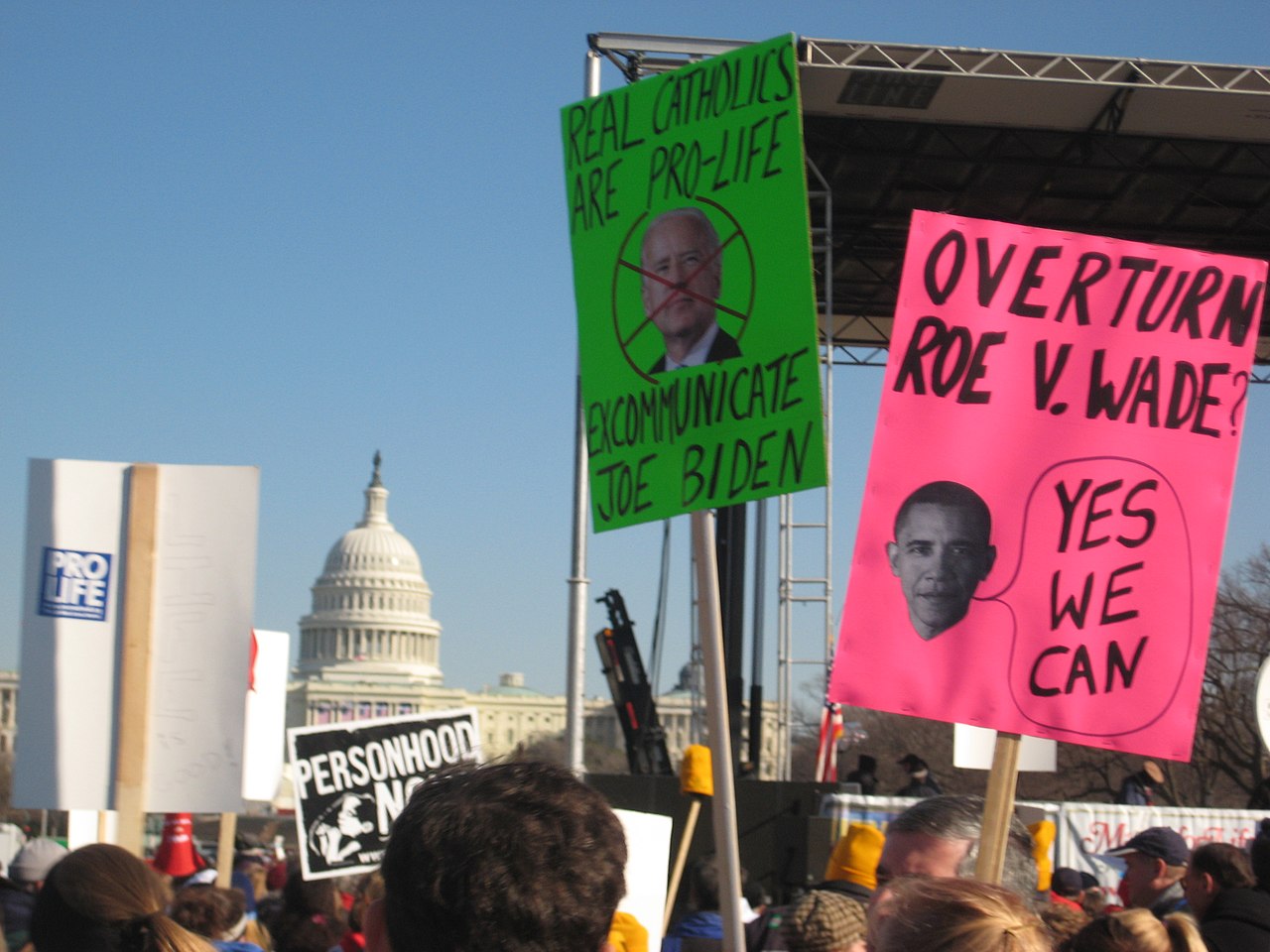
I’ll not mince words: The Supreme Court, having arrogated to itself a responsibility constitutionally reserved to the states, deserves a lot of blame for the ravaging effects that the abortion issue has had on public discourse. This issue arguably would be a lot less psychologically charged if it had been left to state legislatures to resolve.
I will carry the argument a step further: I contend that the court, by insinuating itself into every facet of American life, has undermined the deliberative capacity of states and localities in many ways. One could argue that this is a symptom of just how impossibly large and unwieldy the federal union has become.
The abortion issue not only has morphed into one of most contentious issues in America but has but also, certainly over the last 50 years, has sparked a considerable divergence of opinion over what exactly defines life.
Moreover, one could make the case that the wide divergence on the issue, which arguably was exacerbated unnecessarily by the Court’s 1973 ruling, also serves to underscore that the Framers were right from the start about country simply being too culturally diverse to be governed centrally.
Within the last century, the court ostensibly has expanded its purview at least partly based on the argument that Congress and state legislatures simply aren’t equipped to resolve such contentious, multifaceted issues. Yet, why should we assume that a court of nine legal specialists is any better equipped to resolve such a complex issue?
Fifty state legislators, comprised of thousands of people who arguably have far more knowledge of local concerns and aspirations of ordinary Americans, strike me as far better equipped to deal with such a damnably and emotional charged issue as abortion.
To re-affirm what I have stated time and again on this forum, I am a Southern nationalist. And if that doesn’t strike the average reader as strange enough, I’ll add that I am the rarest of Southern nationalists: I am one who wants to dispense with the perennial fixation with the Lost Cause and “saving Confederate money” (on the basis that “the South will rise again”). I choose instead to concentrate on the South as it exists today, more specifically, how it has changed during the last 150-plus years.
I have held to this view for the last quarter century, ever since sitting down with 40 distinguished Southerners to organize the rather ill-fated League of the South. Though I was small and marginalized voice among this august group of scholars and writers, I was certain of one thing: that the South would not rise again on the foundation of the Lost Cause, the old Confederacy. I argued instead that whatever merged from meeting should function as both a think tank and clearing house for secessionist and radical decentrist ideals. In fact, I even argued that it was not necessarily in the South’s interests to secede ahead of the other regions or, at the very least, to demand radical autonomy from the rest of the country.
Yes, the South is different enough from the rest of the nation. Yet, even then, such deep cleavages were forming between what is now known as blue and red America that a new constitutional arrangement sooner or later would have to be worked out, not only to resolve this impasse but even to avoid another civil war. And emerging reality essentially would work to free up the South to pursue its own destiny.
I essentially argued that all we had to do was to work assiduously to popularize concepts of neo-secessionism and radical decentralization. The deep cultural and political fissures forming within the country – recall the League organized shortly after the 1994 GOP congressional sweep – essentially would complete the work for us.
It wasn’t to be. There was a handful of diehard Confederate restorationists on hand who would carry the day for the Lost Cause narrative. They believed that the anger welling up over the growing assault on Confederate symbolism and heritage would supply a sufficient center of gravity for a new Southern nationalist movement.
They were proven wrong within the next 5 years.
For my part, I went along with it, albeit rather grudgingly, until 1999. Shortly thereafter, I broke with the League and developed a web presence known as “Home Rule for Dixie!” that made the strong case for the wholesale abandonment of the Confederate restorationist narrative, calling instead for an entirely new approach to Southern self-determination that factored in all the changes that had transpired since the collapse of the Confederacy in 1865.
I argued that there were legions of contemporary Southerners who never would be won over to be Lost Cause narrative but who could be persuaded that the 15 historically cultural Southern states, which included historically Unionist West Virginia, ultimately could be won over to the argument that the South represented the best of what remained of fraying American Republic. It would, over the course of time, constitute the declining Republic’s moral and cultural lifeboat.
The “Home Rule for Dixie!” concept sparked a lot of acrimonious debate in the Southern movement before its effective collapse a few years later. After concluding that my message likely was premature, I abandoned the effort in 2003.
Since the 2016 presidential election, I am now more convinced than ever that such a movement not only is viable but likely foreshadows how events will play out in the future.
One of the nation’s premiere conservative intellectuals, Victor Davis Hanson, apparently shares a similar view. Hanson, a Straussian conservative, believes that the South and the rest of Red America, far from representing the region of the country where Lost Cause rhetoric and animosities still are being nursed, now comprises the well-spring of American values and virtue and possibly even the foundation on which these values will be re-affirmed and renewed. Hanson even goes so far to argue that the “New North” has become the Old South, and the New South the Old North.
It many ways, his argument comes very close to the one I made a generation ago through the “Home Rule for Dixie!” effort.
As Hanson contends, the New North in many ways embodies the racial exclusivity, single-party hegemony and single-crop economies ascribed to the South a half century ago. And amidst all of this, a remarkable sorting-out effect is ensuing in which the South and other red states have begun to bear the hallmarks of a functional America.
As Hanson argues:
…there is a growing red state/blue state divide—encompassing an economic, cultural, social, and political totality. The public seems to sense that the blue-state model is the more hysterically neo-Confederate, and the red state the calmer and more Union-like. The former appears more unsustainable and intolerant, the latter is increasingly more livable and welcoming.
It seems that Hanson essentially has arrived at the same conclusion I did a quarter century ago: that the South, despite all its historical blemishes and setbacks, really does represent the most redeemable part of America – truly the most viable part, the moral and political lifeboat.
The South is going to rise again, albeit in a distinctly America form, though embodying those traits that, generally speaking, have set the region apart from the rest of the country: civility and unwavering devotion to faith, family and personal liberty.
It is remarkable to think that in two days this seminal world event – the fall of the Berlin Wall marking the collapse of Soviet communism, arguably the greatest event of the last half of the 20th century – will have occurred 32 years ago, though it is now significantly forgotten.
Even more remarkable to me is the fact that a rising generation of Americans led by intellectual nonentities such as Ocasio-Cortez now embrace socialism with opeb arms, despite its being seemingly consigned to the ash bin of history three decades ago.
I recall that day so very long ago as it it were yesterday: As a Cooperative Extension professional I was returning from a visit to South Alabama and stopped off in Montgomery to visit my favorite used bookstore.
NPR was being broadcast on on the store’s sound system. There was talk of some opening of the Berlin Wall, though likely one that would not occur for several weeks. After purchasing a couple of books, I jumped into my little red Nissan truck and sped north up Interstate 85. When I entered the living room my wife was glued to the TV as ecstatic East and West Berliners danced arm in arm atop the Berlin Wall. My jaw dropped. It is a memory I will take to my grave.
Within a year or so of that event, one who emerged as one of the decades most fashionable and preeminent thinkers of the 1990’s, a neoconservative policy wonk named Francis Fukayama, even went to far to argue that the fall of Eastern European socialism served as a confirmation of Hegel’s dialectic – that supple, pro-market liberal democracy represented the end of history, the working out of humanity’s historical contradictions.
To many around the world, the United States, most notably its costly two-generational struggle against global communism, seemed entirely vindicated.
Thirty-plus years later, all this headiness seems so dated. And even more remarkable to me is how American life has come in many respects to closely resemble facets of the old Soviet Union and its Eastern European straps, replete with a nomenklatura that not only brazenly enriches itself but also its sons and daughters – one that even calls out a class of despised Kukaks (i.e., working class whites) as the direst threat to enlightened thought and and what our rulers now blandly describe as “our democratic values.”
In true Soviet fashion, dissidents not only are spied on but even consigned to prisons for months without being served habeas corpus, while a compliant media, on the elites’ behalf, sweep all of this incipient tolitarianism under the rug. And amidst all of this is a disenfranched population of tens of millions of ordinary, fed-up, put-upon people who, much like the Soviet masses decades ago, invent mordant jokes not only about the corruption of their ruling class but also how all of this is covered over by Legacy Media pixie dust
Millions yearn for the day when these corrupt nabobs finally will be served their long-awaited comeuppance – and, quite frankly, why shouldn’t they?
Why is it that so much of what is written today in the victimhood genre strikes me and many others as parody?
One of the most notable examples of late is a screed in The Nation written by a person of color who describes how he has ensconced himself within a dense web of material and technological comforts while anticipating the day, the dreaded day, when he reluctantly will have to emerge from this cocoon to confront once again all the indignities of white society.
Incidentally, he refers to this cocoon as his “whiteness-free castle.”
Hell, forget the parody and consider for a moment the irony bound up in all of this. But then, I doubt that he perceives any irony at at all – the fact that virtually all of the contemporary comforts in which he has enveloped himself all these months were achieved by the very civilization that he so obviously despises.
It’s also worth mentioning that this writer also possesses a singular educational pedigree, having graduated with a B.A. and J.D. from the educational institution that most embodies historic whiteness: Harvard.
Well, let’s just hope that the screen door, invented in 1887 by an Iowan named Elizabeth C Harger, presumably of European extraction, and, for that matter, refined over the past century and mass produced and marketed within a global economic system regarded as one of many crowning achievements of Western civilization doesn’t hit him in the ass on his to way to his first post-covid outing.
Mainstream media’s conspicuous silence in the aftermath of Biden’s very conspicuous fall on the steps leading to Air Force One is one of the many reasons reason why I will NEVER be lectured ever again by any liberal about anything.
If you’re old enough, you recall the unrelenting fun that SNL made of Republican President Gerald Ford’s repeated stumbles.
More recently, #AmericaPravda spared no effort to analyze anything and everything associated with Trump’s presumed physical and mental decline. But that is not surprising because Mainstream Media are Establishment media. They have been in service to a narrative since at least the FDR presidency and arguably earlier.
Whatever the case, American liberalism is nothing but a sick self-parody now days, evidence of this empire’s precipitous decline on all fronts, which is significantly of liberalism’s making. #LateAmerika #BrezhnevRedux
Borrowed for purposes of illustration from the Dishcast with Andrew Sullivan
I have been intrigued with the recent behavior of Andrew Sullivan, one of the most innovative and gifted political commentators of the age.
Note in this column Michael Anton’s description of how exasperated Sullivan, an ardent NeverTrumper and self-described conservative (albeit of the wet Tory variety), became during a podcast interview in the face of interviewee Anton’s refusal to acknowledge the validity of 2020 election outcome. Sullivan would abide none of this and, over the course of the interview, kept dragging Anton back to the topic.
Personally, I think that Sullivan’s exasperation with this topic possibly provides a fascinating glimpse into the soul of the American political cognoscenti, especially those in the thinning ranks of thr centrist camp, of which Sullivan is the most conspicuous and talented member.
Anton is only one of several commentators who have pointed out the fractiousness with which Sullivan and other political commentators have treated those who have summoned the temerity to question the validity of the election outcome. But then, why wouldn’t they?
For at least the past century and a half, most Americans have regarded their country as one of humanity’s singular achievements, one built significantly, if not entirely, on the basis of ideals rather than from the Old World ingredients of language, culture and ethnicity. And this narrative typically has also encompassed the argument that this singularity has been sustained – backstopped – by governing institutions, notably an electoral system that, at least until the last few election cycles, has set a benchmark not only for every other Western constitutional democracy but also for nations that aspire to lofty standards of governance.
Singularity has comprised much of the adhesive that has held this country together for at least the past century, especially following the tidal wave of immigration from Eastern and Southern Europe in the late 19th century, which threatened to dilute the moorings that previously had connected the country to its strong Anglo-Saxon cultural and political legacies.
In the face of this rapid demographic transformation, American intellectuals began improvising an updated national identity that over time was expressed as propositional nationhood. It is grounded on the premise, foreshadowed in the Gettysburg Address, that America derives its identity from the ideals outlined in the Declaration of Independence and that these are sustained by a rigid adherence to the rule of law. Many liberals and a few conservatives would contend that this improvisation has worked reasonably well, at least, until recently.
Yet, cultural and political upheavals since the 2016 Trump election upset have drawn growing numbers of Americans on both ends of the political spectrum to question whether or not these idealistic foundations have frayed to the point of threadbareness.
While it’s impossible to discern an individual’s motives, I suspect that Sullivan is one among several in the elite punditry who harbor serious misgivings about what is unfolding in America. After all, Sullivan, a Briton by birth, is a naturalized American who has affirmed more than once in his columns and blogs how the idealistic underpinnings of American national identity ultimately inspired him to acquire citizenship.
Yet, I wonder if this enthusiasm has been beset recently with the same gnawing doubts that have gripped other Americans. Sullivan is no naif by any stretch of the imagination. He has demonstrated time and again in his commentary not only vast erudition but also a highly nuanced understanding of vitually every prevailing political trend.
Over the course of his wide reading, he’s undoubtedly encountered Czech playwright and later Czecholovakian President Vaclav Havel’s seminal essay “The Power of the Powerless,” wherein Havel likens the embattled Czecholoslovakian Communist regime and its underpinning ideology to a hermetically sealed package prone to rapid spoilage at the mere prick of the seal.
A time or two I’ve wondered if Sullivan, pondering the parlous state of American unity, has been reminded of this seminal essay and noted parallels with present-day America.
I readily confess that I have.
Sullivan undoubtedly understands that a nation such as the United States founded on and sustained largely by abstract ideals survives as a functioning constitutional democracy only so long the majority of its citizens evince faith in these ideals.
What if the spoilage described by Havel ultimately is setting into American idealism? Likewise, what happens if Americans, growing numbers of them, no longer express confidence in these ideals? What if they come to the point of openly expressing doubts that these ideas still comprise an adequate basis for America unity?
To be sure, Sullivan’s exasperation with Anton may simply have been a means of reinforcing his standing as an Establishment commentator standing at the temperate center of American elite discourse. And who can blame him? Sullivan has no incentive to run afoul of elite media,, despite that fact that it’s increasingly evincing proto-totalitarian traits. After all, where could a gay man with an Oxbridge/Ivy League educational pedigree possibly go?
Still, I doubt that I’m the only one who has closely followed Sullivan’s career and noted his recent behavior. He’s too smart and perceptive to ignore the specter that is haunting America: the increasingly evident doubt among millions of Americans of the efficacy of this nation’s ideals and as well as the institutions charged with sustaining national unity.
Maybe this accounts for Sullivan recent exasperated podcast exchange with a defiant Michael Anton.
It is intriguing and, quite frankly, heartening, that observers on both ends of the political spectrum perceive that the American Empire is in headlong decline and that something new invariably must follow, whether this occurs years or a few decades from now.
For me, this decline became increasingly evident more than a decade ago when California governors, beginning with moderate Republican Arnold Schwarzenegger, began characterizing the Golden state as a nation within a nation, possessing all the accoutrements of nationhood, including one of the world’s ten largest economies.
Now such affirmations almost seem routine. Legislators in the nation’s second largest state, Texas, are even considering putting a secession initiative on the state ballot – an effort that has earned the endorsement of the Lone Star State’s prominent GOP leaders and that even has piqued the interest of GOP leaders in other states.
Granted, formal secession from the American Empire is decried by elites, particularly when these calls eminate from red states. But the rhetorical cat is out of the bag. Growing numbers of pundits on both ends of the political spectrum no longer are overlooking the obvious: the American Empire is in terminal decline, much like its erstwhile Soviet nemesis some three decades ago.
As this article in The Nation attests, the telltale signs of decline and collapse are readily perceptible. Yes, there’s the inevitable leftist pablum through which the reader must wade to encounter some truly interesting nuggets, notably mention of the challenges of constructing a new civilization from the imperial rubble.
As many of us on the right and even a few on left see it, there is only one basis on which this civilizational reconstruction can occur: It must begin with smaller political entities rather than the oversized, lumbering, bureaucrarized white elephant we’re contending with now.









 Ruby Red Republic