
• Introduction
  • About Ruby Red Republic
  • Contact
  • Blog

Ruby Red Republic

~ Thoughts on Red States and "Deplorables."

Ruby Red Republic

Tag Archives: Jim Langcuster

Remembering an Academic Outlier

06 Tuesday Mar 2018

Posted by Jim Langcuster in American Education, American Federalism, Conservatism, Southern History, The Passing Scene, Uncategorized

≈ 1 Comment

Tags

Academia, Jim Langcuster, Melvin E. Bradford, National Endowment for the Humanities, paleoconservatism, Political Correctness

Melvin-Bradford

Melvin E. Bradford. Photo: Courtesy of the Fort Worth Independent School District.

Something got me thinking last night about  one of the nation’s late, great academic outliers and mavericks, the late M.E. Bradford, and how, if he had survived into his 80’s, would be regarded today as a pariah on most U.S. college campuses. Bradford was regarded as a “paleoconservative,” one of the leading intellectual lights of the paleocon movement.


He was a student of the old Southern Agrarian tradition and a vocal and intrepid defender of the Constitution and the Old Republic.  He was also a searing critic of the legacy of Abraham Lincoln and the 16th president’s efforts to consolidate the American Republic. And while in intellectual terms he was considered an outlier, Bradford was one of a number of traditionalist conservative academics who, once upon a time in America, were valued for the role they served in leavening and balancing out academic discourse. He taught at several prestigious academic institutions, including the U.S. Naval Academy, and served as president of the Philadelphia Society.


I cherish two of Bradford’s works – “Remembering Who We Are” and “Original Intentions: On the Making of the Constitution“ – for providing me with critical foundational bricks in my intellectual development and maturation.


A vocal Reagan supporter in the 80’s, Bradford was tapped to head the National Endowment for the Humanities. However, due to fierce opposition from neoconservative elements, he ultimately was passed over for William Bennett, the neocons’ candidate, but not before receiving the endorsement of U.S. Senators from every geographic region of the country as well as by a number of prominent leading conservative intellectuals, including Russell Kirk, Jeffrey Hart, William F. Buckley and Harry Jaffa.

 
Bradford’s ignominious upending by the necons played a key role in deepening the already palpable ideological divide between paleocons and neocons intellectuals within the Reagan coalition that culminated in Pat Buchanan’s insurgent presidential candidacy against George H.W. Bush in 1992.

Bradford died while undergoing heart surgery at the relatively young age of 58 in 1993.  In a sense, he is fortunate not to have lived into his eighties to reflect on the intellectual wasteland that characterizes American academia today.


It’s one thing to be an outlier, quite another to be a pariah, which is precisely the way Bradford would be regarded today in America’s toxic academic environment. And this is remarkable considering that scarcely a generation ago, academic mavericks and nonconformists such as Bradford were still afforded a place, even an exalted place, in many American institutions of higher learning, valued for the role they served in refining intellectual inquiry and open discourse.

Reaping a Cultural Whirlwind

05 Monday Mar 2018

Posted by Jim Langcuster in Devolution, The Passing Scene, Uncategorized

≈ 1 Comment

Tags

authoritarianism, Confederate Symbolism, Cultural Warfare, Jim Langcuster, Left, Southern Heritage, White Nationalism

protester

Protester opposing “Trump/Pence Regime” in Portland. Photo: Courtesy of “Old White Truck.”

I’ve been something of a conservative cultural warrior for the last 30 years, albeit a weary and, at times, a very reluctant one.  For a long time, I essentially had thrown in the towel, happy to leave the struggle to younger warriors infused with a bit more zeal and encumbered with far less cynicism.

Hillary’s “basket of deplorables” comment galvanized me.  It reached deep into my psyche and activated some primordial something in me.  I resolved that, armed with my modest financial resources and meager rhetorical skills, I would fight to my dying breath the authoritarian social order that these reckless comments portended.

Actually, I saw where this was heading a long time ago.  A generation ago, I wrote extensively about the controversy over the Confederate flag.  As far back as the 1990’s, I and many others perceived that the left’s rage – or feigned rage – over Confederate symbolism ultimately would lead to an assault of the wider subject of American symbolism and ideals.  In the left’s view, after all, American symbols and ideas are, in moral terms, little removed from the patrimonial, slavocratic Confederacy.

Reflecting back on all of this, I’m reminded of what a prophet the late University of Georgia historian Eugene Genovese has proven to be.

Genovese predicted that in the course of the left’s sowing the wind, the entire nation would ultimately reap the whirlwind.  American society, he feared, ultimately would pay a price, perhaps an egregiously high price, for robbing white, predominantly working-class Southerners of their heritage and, in effect, rubbing their noses in the dirt.

Yes, I know,  a  legitimate argument can be made for eliminating government-sanctioned displays of the Battle Flag, which has all but been achieved within the last few years.  But there’s a difference between creating accommodating public spaces and asserting that Southerners who evince devotion to Confederate symbolism and the Lost Cause are little removed from reactionary racist pond scum.

There comes at point at which the quest for fairness degenerates into hitting below the below the belt.  The Obama administration’s twilight decision to remove displays of Confederate flags on fixed poles from National Cemeteries, even where Confederate veterans are buried and despite a previous decision by Congress not to impose this ban, was a malicious parting shot – a punch below the belt – by an administration sworn to “fundamentally transforming” America.

As Genovese predicted a generation ago, this denigration has only worked to augment the increasing sense of alienation among working-class whites.  They’ve grown weariy of being depicted as this nation’s problem demographic, especially considering that they have borne a disproportionate share of this nation’s imperial burdens, having filled enlisted ranks in every American military outpost in the world.

This sense of alienation will only intensify in the future.   The left has won the cultural war, but as Rod Dreher observes in a recent column, conservatism wields enormous political power and its adherents are still capable of marshaling a helluva lot of obstinance.

And there are lots of mad, obstinate people out there. Dreher cites the growing numbers of white Americans increasingly drawn to white nationalist rhetoric. He quotes extensively from a self-described well educated white intellectual who confesses to being both repelled and attracted to white nationalist rhetoric.

I’m a white guy. I’m a well-educated intellectual who enjoys small arthouse movies, coffehouses and classic blues. If you didn’t know any better, you’d probably mistake me for a lefty urban hipster.

And yet. I find some of the alt-right stuff exerts a pull even on me. Even though I’m smart and informed enough to see through it. It’s seductive because I am not a person with any power or privilege, and yet I am constantly bombarded with messages telling me that I’m a cancer, I’m a problem, everything is my fault.


For me, the CNN town meeting about gun violence – all the shouts of “Murderer!” and “Burn her!” – really put all of this into deep perspective.   I suspect it did for a lot of Americans.  I think it underscored to millions of us that a kind of Rubicon has been crossed and that the divisions in this country are only going to grow worse.

Frankly, I am surprised that the soft secessionist sentiment is largely confined to California and isn’t yet being expressed widely in red states. I think this a reflection of two factors: first, the conviction among blue-state “progressives” that they are now the dominant cultural force in America and that such talk is acceptable, so long it’s aimed at affirming and reinforcing progressive dogma; and, second, a stubborn perception among conservatives in red states that all eventually will be worked out – that America remains a singular nation and that we all will finally return to our senses.

In time, though, I think that many red state Americans will conclude that things in this country will become even more untethered – unstuffed, as the case may be – and that some form of devolution, perhaps even some desperate attempt at secession, ultimately may point the way out of this impasse.

And recall that Dreher, the creator of the Benedict Option, is a separatist of sorts.

A generation ago, I wrote extensively about how the South represented the most fertile soil from which a counterrevolution could be mounted. While my this conviction has wavered a bit in recent years, I still suspect that sooner or later, as these national divisions intensify, that the counterrevolutionary struggle will coalesce in the South.

Whatever the case, I think that conservatives should forget about cultural warfare.  Dreher is right to stress that the cultural war has ended with a resounding victory by the left. Our energies at this point should be invested in a devolutionary movement – or movements – not in fighting a rearguard cultural war, which has been irretrievably losts, at least, for the foreseeable future.

Exposing the Paddy Caligula Clan – Finally

02 Friday Mar 2018

Posted by Jim Langcuster in American History, U.S. Politics, Uncategorized

≈ Leave a comment

Tags

Chappaquiddick, Edward Kennedy, Jim Langcuster, Kennedy Clan, Liberal Elite, Ruling Class

Hollywood will release Chappaquiddick, a movie Chronicling the sordid behavior of Massachusetts Sen. Edward “Ted” Kennedy, next month.

It’s long overdue.  The movie will only underscore why I and millions of other conservatives around the country harbor such as deep loathing for our liberal ruling class.

Think about this for a moment: Following the incident on the bridge, Paddy Caligula IV (following in the footsteps of Joe, Jack and Bob), “walked back to his motel, complained to the manager about a noisy party, took a shower, went to sleep, ordered newspapers when he woke up and spoke to a friend and two lawyers before finally calling the police.

As it turned out, Mary Jo Kopechne survived for hours due to an air pocked in the car and then presumably died of slow asphyxiation. If he had called for help immediately after the incident, she conceivably would still be alive today.

Yet, thanks to a combination of three things – Kennedy money, media complicity and the herd mentality among the rank-and-file left – Lascivious Ted lived out his life as the apotheosis of American progressive liberalism. He was lionized not only as the heir of Camelot but even posed a serious intra-party challenge to incumbent President Jimmy Carter in 1980.

Yes, his sexual predation apparently rivaled that of the notorious Harvey Weinstein, who inspired the #MeToo movement.  In fact, Kennedy’s lechery even exceeded his older siblings and his father, which is saying a lot.

And yet, the enlightened progressive voters of the Bay State overlooked all of this time and again.  A time or two in my life, I’ve been subjected to ribbing for coming from a state that idolized the likes of George Wallace and that even carried this adulation over to his ill-fated wife, Lurleen. Yet, it seems to have paled in comparison to the Kennedy cult of Massachusetts.

To be sure, there are certainly some very bad apples in conservative/Republican ranks, but I really would contend that they simply can’t get away with as much.

Honestly, if Ronald Reagan or one of the Bush siblings had run a woman off a bridge and waited hours to inform police, they not only would have been indicted but also would have faced utterly derailed political careers.

They would not be lionized to the ends of their lives as paragons of conservative virtue.

Under the circumstances, isn’t it just a little easier to grasp the rage that Richard Nixon, American political history’s classic underdog, felt for the Kennedy siblings – all of whom essentially were entitled, spoiled brats who carried on the philandering, exploitative lifestyle of their father, Bootleggin’ Joe?

Southern-Style Self-Flagellation

07 Thursday Dec 2017

Posted by Jim Langcuster in American Federalism, Southern History, U.S. Politics, Uncategorized

≈ Leave a comment

Tags

2017 Alabama Senate Race, Alabama, Alabama History, Jim Goad, Jim Langcuster, Southern History, Wayne Flynt

Alabama-Capitol

Alabama Capitol, Montgomery

Wayne Flynt, Auburn University emeritus professor of history,  has cultivated a reputation as Alabama’s progressive conscience. He is a prodigious writer who has published some 13 books on the history of Alabama and the South.

Predictably, he has weighed in on the upcoming Alabama Senate election, offering less than a savory view of Republican nominee Roy Moore.

Moore, Flynt contends, “represents the old Alabama of Robert E. Lee Ewell, of lynching and the sexual abuse of women.”

“Law to Moore is merely an instrument of exclusion and oppression, whether of women, teenage girls, African Americans, immigrants, Jews, Muslims, or homosexuals,” he contends.

I’m not surprised that Flynt regards Moore as the worst threat to Alabama’s reputation since Eugene “Bull” Conner.  But I do find it slightly irritating whenever Flynt raises these issues as an excuse to engage in another round of self-flagellation over what he perceives to be Alabama’s wretched political and cultural legacy, one for which Alabamians are obligated to atone.

I’ve never liked this sackcloth-and-ashes approach and that goes for countless other Alabamians.

I am far from a scion of the old South.  I come from simple old yeoman Southern stock, particularly on my father’s side. My paternal line and much of my maternal one were among the thousands of lumbers – desperately poor whites – who poured into this impoverished region in the early 1800’s simply because they had no place else to go.

Alabama was not only encumbered with legions of struggling poor whites but also with a slave economy that maintained a predominant hold in the Southern half of the state – one that collapsed after the close of the Civil War. Essentially we are talking about a deeply bifurcated state, culturally, politically and economically, that has been digging itself out of poverty and relative backwardness – imposed, incidentally by the Yankee equivalent of the British Raj – since the end of the Civil War.

One of the only socially redeeming factors on the Alabama frontier was evangelical religion, which dragged so many of our forebears away from a life of gambling, drinking and bare-knuckle fighting. This old religion, largely imported from New England, carried a strong Calvinist hue, and it carved out a place in the hearts of many Alabamians, even among apostates like me. It is deeply embedded in our DNA – as much as Catholicism is in Irish cultural DNA.

It’s not surprising that many of us identify with Moore’s public avowal of religious faith and propriety.

Alabama, like every other state in this Union, evolved out of a unique set of circumstances. And our politics and culture reflect many effects of that development.

Personally, there are many aspects of New England society that I find appallingly irritating and abhorrent and that have adversely affected the course of this country, especially after these tawdry shits became the cultural and economic hegemons after the war. Yet, they have enjoyed a free pass, largely because they remain our national and cultural hegemons.

Southerners, on the other hand, remain a special focus of animus among these people and their spiritual and intellectual progeny on the Left Coast. That is not all that surprising: As the world’s first propositional nation, Americans have always required a focus of animus, which the South has supplied, however unwittingly, since this country’s founding.

Consequently, every other ethnic group and region is afforded a pass for bad behavior stemming from its cultural inheritance EXCEPT the South, despite our region’s having inherited a cultural legacy with both good and bad elements like every other ethnic group and region in this nation and throughout the entire planet.

And honestly, given the unfortunate set of circumstances that fate has meted out to this region beginning with its initial settlement, why should we expect anything to have turned out differently – really?

Writer Jim Goad has argued – convincingly, I would contend – that Southerner and other poor Back Country whites provide elite American whites with a basis for conveniently passing off their collective guilt and insecurities.

I’ve grown weary of  this – and, quite frankly, it explains why I insist on flying only an Alabama flag on my property. It’s hard to think of myself as an American when this region of the country is treated as the national hind teat and relegated to sitting on a stool of everlasting repentance.

Yes, Professor Flynt, you have every right to bemoan the legacy of his native state – that’s your First Amendment right – but I and tens of thousands of Alabamians are tired of it.

An Alternative George Wallace

06 Wednesday Dec 2017

Posted by Jim Langcuster in American History, Conservatism, Southern History, U.S. Politics

≈ Leave a comment

Tags

Alabama, Conservatism, George Wallace, Governor of Alabama, Jim Langcuster, Politics, Southern History

George-Wallace-Portrait1An image of George Wallace turned up on my Facebook news feed yesterday. Seven years ago, I posted a photo along with speculation about how George Wallace’s political career would have turned out of he had somehow managed to chart a different course during the segregationist era. He was a moderate Democrat at heart with no serious animus toward blacks and no seriously vested interest in segregation – at least, no more than the average white Southerner of the time.
I’ve written many times about the Wallace legacy – I find him one of the most fascinating and enigmatic political figures in Southern and U.S. history – and I’ll probably keep thinking and writing about him for the rest of my life.  He was not only a gifted politician but also an uncharacteristically intelligent one.  He was also a visionary who transformed American politics despite coming from what was considered by pundits to be a provincial backwater.

He started out no conservative. His former close friend and fellow University of Alabama law student, U.S. Judge Frank Johnson, once related that arguing with Wallace essentially amounted to debating a New Deal socialist.

As a student at the University of Alabama, Wallace was an outsider.  His idol was Carl Elliott, a wonder kid from my native Alabama county of Franklin who worked his way through Alabama and eventually was elected student body president, beating the student establishment know as “The Machine,” which exists to this day.   Elliot is remembered as one of Alabama’s most progressive-leaning Alabama congressmen.

Wallace was a Democratic Party stalwart who refused to bolt the 1948 Democratic Convention over the party’s proposed civil rights plank in the party’s platform. As an Alabama circuit judge, he cultivated a reputation for affording black litigants courteous treatment in his courtroom. His bitter defeat in 1958 at the hands of John Patterson changed all of this, driving him to become an ardent segregationist.

In a very real sense he sold his political soul for the sake of political expediency.

I’ve always wondered how differently the Wallace legacy would have been if our 45th Alabama governor had somehow managed not to carry the segregationist legacy.

Moreover, I have also wondered about how differently Wallace’s fortunes may have turned out if he had avoided an assassination attempt. Would he have brokered some sort of John Connally-style arrangement with Nixon, perhaps even serving in a cabinet post? Could he have prevented Jimmy Carter’s assent in 1976? All of these historical what if’s are the grounds of lots of fascinating historical speculation.

Many American Republics Instead of One?

25 Saturday Nov 2017

Posted by Jim Langcuster in American Federalism, American History, Devolution, Federalism, The Passing Scene, Uncategorized

≈ Leave a comment

Tags

Civil War 2017, Jim Langcuster, National Divisions, secession, Thomas Jefferson

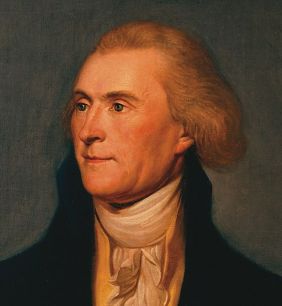
Thomas-Jefferson2

Thomas Jefferson

The American Thinker recently painted a disturbing picture of the American future.  We are embroiled in a Civil War – for now, a cold one, though one that bears many hallmarks of one that eventually could run hot.

And from my perspective as a conservative, the left seems implacably opposed to compromise.  And why shouldn’t it be?  They control most of the institutions that define cultural hegemony:  the mainstream media, the arts, popular entertainment and higher education, not to mention, elements of the so-called Deep State.   As I have argued in this forum many times, a Democratic victory last year would have sealed its victory.

The rancorous divisions in this country have prompted some thoughts about an observation Jefferson offered throughout the post-revolutionary period of American history. He presumed that this continent was too big to encompass one American nation. He expected that settlers, as they spanned across broad American continent, would establish several republics, though all of them would share mutual affinities.

That was not to be.  As it turned out, our forebears essentially hewed a kind of middle way between the ideals of Jefferson and his arch ideological rival, Alexander Hamilton. We have tended to place great emphasis on the Jeffersonian fixation with individual liberties, while tacking more closely to the Hamiltonian ideal of a centralized federal union.

And I wonder: Could the case be made that this push toward centralization has simply prolonged the inevitable? Isn’t it natural for a country this big to develop distinct regional identities, even fissiparous ones? Would we be getting along better on this sprawling continent if we had been allowed to develop several polities, albeit with strong shared mutual affinities?

The Great Ethnicity Manufacturing Machine

23 Thursday Nov 2017

Posted by Jim Langcuster in The Passing Scene, U.S. Politics

≈ Leave a comment

Tags

Ford Foundation, Hispanic Caucus, Hispanics, Jim Langcuster, Lumbers, White Trash

This article could be just as aptly titled “How the Ford Foundation Created an Ethnic Group out of Thin Air.”

And while I am at it, what the hell is “white” – really? Do, say, Italians and Armenians, even though they are Caucasian, share the same American experience and legacy as a WASP family from the historic Beacon Hill section of Boston? 

I even take umbrage with the term WASP. There is arguably not much WASPish about the lumbers (desperately poor whites) who settled much of the American Back Country. 

I think that we all could make a fresh start by resolving that our ruling class will no longer supply classifications to the rest of us.  And, incidentally, this increasingly tangled ethnic American web – this ruling class strategy to pit one group against another – is another legacy of Wilsonian federalism.

Zero-Sum Federalism

03 Friday Nov 2017

Posted by Jim Langcuster in Devolution, Federalism, The Passing Scene, U.S. Politics

≈ Leave a comment

Tags

Blue States, Decentrism, Devolution, Federalism, House Republican Tax Bill, Jim Langcuster, Red States, Zero-Sum

state-flagsOur federal bonds are fraying.

We Americans increasingly are conditioned to view federalism and, along with it, national unity, in zero-sum terms. And why shouldn’t we?  The century-old cookie-cutter-style federalism imposed on this country via Wilsonian progressivism has been stretched far beyond the limits of its design function. It’s grown increasingly threadbare.  It’s no longer equipped to accommodate the world’s largest and most diverse economy, much less a culture that is growing increasingly diverse and divided.

The latest evidence attesting to this fact:  The uproar among several blue states – California, New York, Connecticut and Oregon, to name a few – over the House Republican tax cut plan.

The House bill would eliminate the most widely-used deduction – income tax – and would cap property tax deductions, the second most-used, at $10,000.  Here’s the rub:  Many high tax blue states rely heavily on these state and local deductions.  Consequently, many middle-class families in these states will end up paying more under the plan.

This is a lesson in history repeating itself – and possibly with dire consequences.  This growing dissension among states over tax policy bears remarkable parallels to the vexatious debates over tariff policy in the years leading up to the Civil War.  This dissension contributed mightily to the already toxic relations between the manufacturing Northeastern states, which favored high, protective tariffs, and the agrarian, slave-holding, export-oriented Southern states, which insisted on low tariffs levied only to raise essential federal revenue.

And, honestly, why should blue states be expected to foot tax relief for the rest of the country?

Some here in the red hinterland would argue that states that operate expansive and expensive safety nets have backed themselves into tight fiscal corners and no grounds for complaint.  But isn’t this their prerogative as sovereign states within a federal union?

This brings me to a social media exchange I had with some friends this morning regarding the future of the country and strategies for restoring some semblance of a social policy, one that accommodates all regions and classes throughout country.

I related to them that for the past generation or so, I’ve striven to become an amateur scholar of post-war politics and economics of post-war West Germany.   As a Tory conservative, I believe that there is much that Americans in the highly secularized, post-Christian 21st century can learn from this morally ravaged society.

I especially admire the old West German Christian Democratic party, which strove to restore a measure sanity to a morally and ethically gutted out post-Nazi society. Moreover, I admire deeply the social market economy that emerged after the war. As this term, social market, implies, it was an attempt by the Christian Democratic Chancellor Konrad Adenauer and his fledgling party not only to stave off socialism but also to build a vibrant post-war free-market economy, albeit one that would provide a reasonably generous safety net and collective bargaining for the working class.

Frankly I would like to replicate some version of the social market to American conditions, but the more I reflect on this, the more it occurs to me that this country is simply to big and diverse – not to mention, badly divided – to implement any such system over a vast scale. What worked – and, to a degree, still works – in a relatively organic society like Germany, simply isn’t tenable in this United States. I could marshal a number of historical arguments for his, but in the interests of brevity, I wont.

Suffice it to say that part of the challenge stems zero-sum views on federalism into which so many of us have fallen.  Blue-state Americans seem to regard any concession to red-state America as tantamount to moral and political betrayal and vice versa.


Under the circumstances, we seem to have drifted far past the point where any kind of humane social order can be established in a nation as large and diverse as the present-day United States.  Indeed, the more I think about all of this, the more inclined I am to adhere to the vision a new constitutional order outlined by the late American diplomat and statesman George F. Kennan.   Maybe the only viable option for American federalism is to heed his call to devolve power to 10 to 12 smaller entities – constituent republics in which 
citizens share strong historical and cultural affinities.

We could still share a common market and a common defense, but responsibilities for implementing social policies such as healthcare, social security, etc., would be left more or less exclusively to these constituent republics.

Yes, this amounts to a systemic, radical change, but is there really any other choice?  Aren’t many states evolving what amounts to different social and economic systems?  California, which possesses the fifth largest economy in the world, has evolved social policies and even a legal system that diverges significantly from much of the rest of the country.

 Under the circumstances, should we really be surprised that an increasing number of states are coming to regard federalism as a zero-sum game?

A Fishing Expedition, a Fire Bell in the Night

02 Thursday Nov 2017

Posted by Jim Langcuster in The Passing Scene, U.S. Politics, Uncategorized

≈ Leave a comment

Tags

Donald Trump, Fishing Expedition, Jim Langcuster, Robert Mueller, Russia Collusion

fishing-hook

Photo: Wikipedia Commons

Conservative commentators are already characterizing the Mueller indictments as a nothing burger in terms of how this investigation ultimately will pan out for Trump.

Investigators will turn up no significant evidence of collusion, many contend, and much of what’s discovered ultimately will portend serious consequences for the Clintons, whose allies, the Podestas, seem to be deeply invested in their own version of Russian collusion.

But as millions of deplorables see it, this investigation has amounted to a fishing expedition from the very beginning. And that is precisely why I’ve always regarded it with considerable amount of apprehension from the start.  Mueller is likely only getting started, and in time, he may end up nailing Trump on something entirely unrelated to Russia collusion: his business dealings.

Frankly, I’ve never doubted for a moment that Trump is a shady business dealer. I imagine that most New York real estate moguls are.  Likewise, I presume that most of his supporters have drawn the same conclusion. But when have rank-and-file Trumpistas ever been interested in his moral or ethical probity, at least, insofar as his past business dealings are concerned?

As I see it, most deplorables understand that we live in singular, if not desperate, times.  Many have come to draw a distinction between people who get rich from rather specious market deals (i.e., the Trumps) and those who apparently cash in on government service (i.e., the Clintons). For millions Trump supporters,  it simply boiled down to finding a mean, tough avaricious SOB to go mano a mano against all the mean tough, avaricious SOBs who run the swamp in Washington.

To paraphrase an old saying, Trump’s an SOB, but he’s our SOB.

So, what happens if the Mueller investigation turns up little, if any, Russian collusion and nails Trump instead on shady business dealings? I am reminded of Jefferson’s fire bell in the night.  This could turn out to be 21st century America’s version of the ill-fated Missouri compromise of 1820, the implications of which sparked Jefferson’s troubling late-night epiphany. Like the Missouri Compromise, a Mueller indictment of Trump on unanticipated grounds could have long-term consequences for American unity.  It could set off a train of events that ultimately could lead this country into a deep, dark abyss, much as the Missouri Compromise ultimately did.

Tens of millions of rank-and-file Trump supporters are going to perceive the Mueller investigation simply as what it arguably is: a fishing expedition undertaken by the ruling class to depose Trump – and the election results – so that it can get back to the old business of spreading more lilies and alligators throughout the Swamp.

What will follow?   Right-wing retrenchment?  Perpetual government gridlock?  A wrenching and protracted upheaval of American political structure?  Widespread social unrest?

We can be virtually certain of one thing: tens of Americans, certainly in the sprawling red hinterland, will likely emerge from all of this angrier and more cynical than ever.

A Different View of Patriotism

01 Wednesday Nov 2017

Posted by Jim Langcuster in American Federalism, Federalism, The Passing Scene, U.S. Politics, Uncategorized

≈ Leave a comment

Tags

American identity, Civil War, General John Kelly, Jim Langcuster, President Trump, Robert E. Lee, States Rights

john-kelly

Gen. John Kelly

Gen. John Kelly has predictably ignited a media firestorm for summoning the temerity to state that Gen. Robert E. Lee was behaving like most Americans of his time by choosing state over national allegiance.

“I would tell you that Robert E. Lee was an honorable man,” Kelly said in an interview with Fox News commentator Laura Ingraham. “He was a man that gave up his country to fight for his state, which 150 years ago was more important than country. It was always loyalty to state first back in those days. Now it’s different today. But the lack of an ability to compromise led to the Civil War, and men and women of good faith on both sides made their stand where their conscience had them make their stand.”

Sorry if I offend some of you, but I proudly and zealously place state and region over country. I happen to believe that the federal government is a constitutional republic conceived with sharply delineated powers and commissioned by the people of initially 11 (later 13) republics to operate as their common agent.

Modern Americans may even find it astonishing to learn early 19th century students at West Point, including the future Gen. Lee,  studied a constitutional textbook written by  attorney and legal scholar William Rawle and titled “A Constitutional View of the United States” that acknowledge the right of secession.

Of course, many of the nation’s premiere historians are weighing in on these intemperate statements, wondering how a man of Kelly’s immense accomplishments and responsibilities could harbor such antiquarian views.

“This is profound ignorance, that’s what one has to say first, at least of pretty basic things about the American historical narrative,” said David Blight, a Yale history professor. “I mean, it’s one thing to hear it from Trump, who, let’s be honest, just really doesn’t know any history and has demonstrated it over and over and over. But General Kelly has a long history in the American military.”

As for the views of these historians, I call on all of you to consider how all facets of American education, for better or worse, have been transformed within the last 60-plus years, largely as a result of the infusion of federal money and the expansion of federal patronage that has followed.

This has been accompanied by what I have come to call a miasmic orthodoxy that has settled on all levels of American education. Under the circumstances, can you see how pluralistic thinking among scholars, especially within the humanities, has been undermined?


← Older posts
Newer posts →

Subscribe

  • Entries (RSS)
  • Comments (RSS)

Archives

  • December 2023
  • November 2023
  • July 2023
  • June 2023
  • January 2022
  • December 2021
  • November 2021
  • October 2021
  • September 2021
  • May 2021
  • April 2021
  • March 2021
  • February 2021
  • October 2020
  • September 2020
  • August 2020
  • February 2019
  • December 2018
  • November 2018
  • June 2018
  • March 2018
  • December 2017
  • November 2017
  • October 2017
  • February 2017
  • December 2016
  • November 2016

Categories

  • Alabama History
  • American Education
  • American Federalism
  • American History
  • Brexit
  • Censorship
  • Christianity
  • Conservatism
  • Devolution
  • Federalism
  • Geo-Politics
  • Imperial Decline
  • Localism
  • Mainstream Media
  • Nullification
  • oligarchy
  • Patriotism
  • Red-State Faith
  • secession
  • Secularism
  • Southern Athletics
  • Southern History
  • The Passing Scene
  • U.S. Politics
  • Uncategorized

Meta

  • Create account
  • Log in

Website Powered by WordPress.com.

  • Subscribe Subscribed
    • Ruby Red Republic
    • Join 27 other subscribers
    • Already have a WordPress.com account? Log in now.
    • Ruby Red Republic
    • Subscribe Subscribed
    • Sign up
    • Log in
    • Report this content
    • View site in Reader
    • Manage subscriptions
    • Collapse this bar
 

Loading Comments...